

Drywall Denham Springs LA
Denham Springs chews up drywall. That's not a dramatic way to put it — it's just the reality of building and remodeling in a place where the air itself holds moisture like a sponge, where August 2016 left over 90% of structures underwater, and where the next hurricane season is always right around the corner. If you've lived here long enough, you already know what happens to walls finished with the wrong materials, or by a crew that didn't account for what Livingston Parish actually throws at a building. Bubbled tape. Mold creeping up from the baseboard. Joint compound that never fully cured because nobody thought to control the humidity during finishing. These aren't rare horror stories — we hear versions of them constantly from homeowners in Springfield Estates, Live Oak Estates, and neighborhoods all along the Amite River corridor.
We're a drywall company serving Denham Springs, Louisiana, and the surrounding Livingston Parish communities. Full installation, repair, flood damage replacement, finishing, texturing — we handle all of it. What actually matters to homeowners here is that we understand the specific conditions that make drywall work in Denham Springs fundamentally different from doing the same work in north Louisiana or anywhere that doesn't sit a few feet above a flood-prone river basin. This page lays out everything you need to know about getting drywall work done right in this area.
Why Denham Springs Is One of Louisiana's Most Demanding Drywall Markets
The humidity numbers alone tell part of the story. Year-round relative humidity averaging between 75 and 85 percent means drywall here is constantly absorbing and releasing atmospheric moisture. Standard half-inch drywall — the kind that performs fine in drier climates — will eventually show the effects of that in a home without proper vapor control. You'll see it first in the joints. The tape starts to blister, the compound cracks along the seams, and by the time the visible damage shows up, moisture has usually been working behind the wall for a while.
Then there's 2016. That flood reshaped the drywall market in Denham Springs in ways that are still playing out today. Virtually every neighborhood in the city saw water intrusion — Tanglewood, Stoney Point, Hunters Ridge, Colyell Creek, Rushing Oaks, all of them. Entire subdivisions were gutted to the studs. The demand for contractors after that event was unlike anything the local market had seen, and it drew in crews from across the region — some qualified, some absolutely not. A portion of that post-flood repair work is now failing. Wrong products, skipped vapor barriers, framing that wasn't fully dry before new panels went up. We've pulled sheets in Walker North homes re-drywalled after 2016 and found mold colonies behind panels that looked perfectly fine from the living room.
Hurricane season adds another layer. June through November, wind-driven rain finds every gap — around window frames, through roof penetrations, along soffit lines. A single roof event during a named storm can push enough water into an attic to saturate ceiling drywall across an entire floor plan. We've seen it in homes on Juban Road, in newer construction near Juban Crossing, and in older ranch houses backing up to Colyell Creek. The ceiling shows a stain, the homeowner patches it, and six months later the whole section is soft and the tape is falling. The right fix isn't cosmetic. It's replacement, proper drying, and in many cases, upgrading to mold-resistant product.
The Products We Use — And Why They Matter Here
Not all drywall is the same. That's obvious in theory, but in practice a lot of homeowners don't know the difference until they've already had a problem. Here's what we actually specify and install for Denham Springs projects:
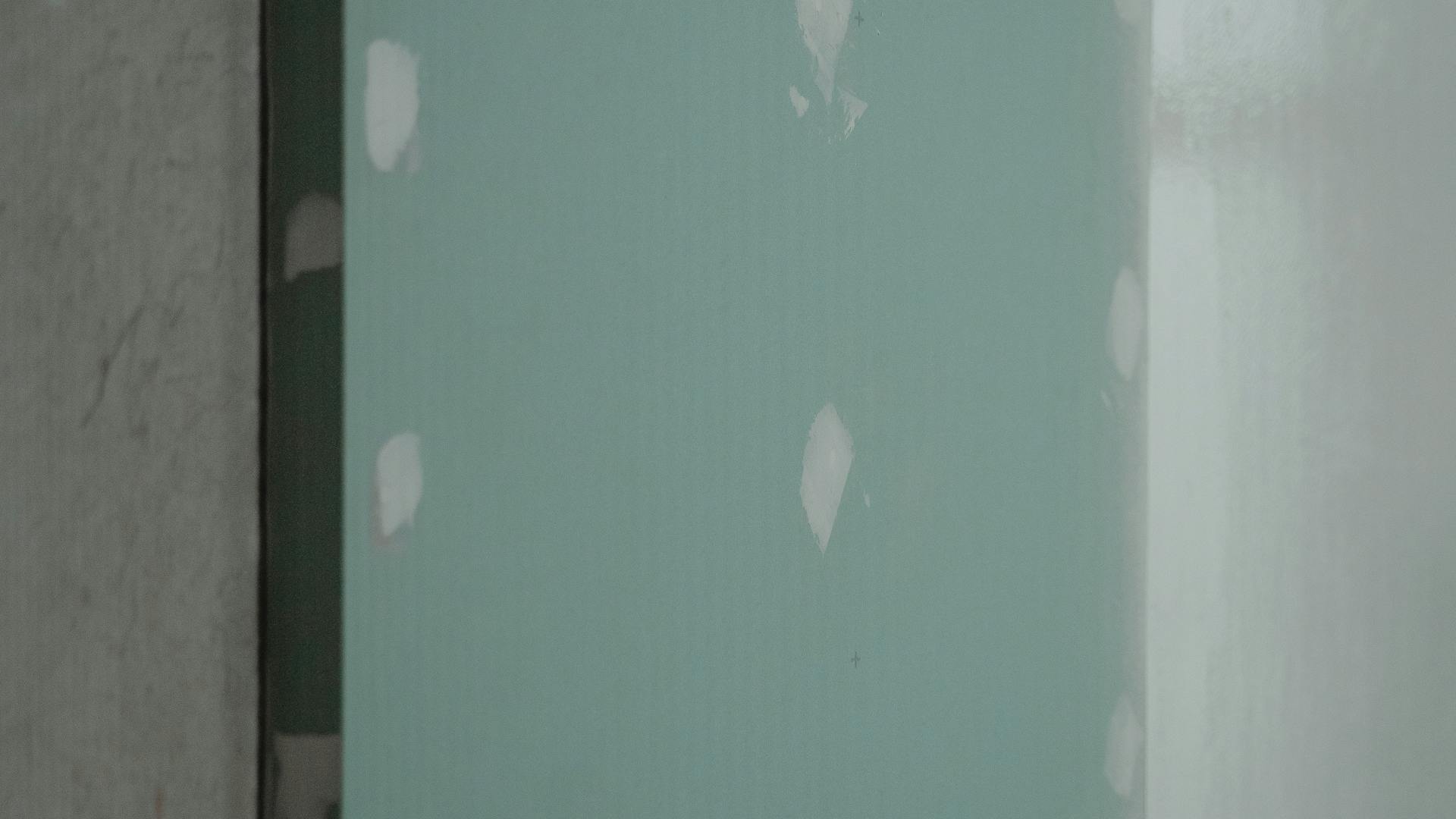
- Mold-resistant drywall (purple board, DensArmor Plus): For any room with elevated moisture exposure — bathrooms, kitchens, laundry rooms, and any space within 24 inches of a water source — we default to mold-resistant product. IRC Section R702.4 as adopted under the Louisiana State Uniform Construction Code requires it in those locations. DensArmor Plus uses a fiberglass mat facing instead of paper, which eliminates the primary food source for mold growth. In Livingston Parish's climate, this isn't a premium upgrade — it's a baseline.
- Type X fire-rated drywall (5/8 inch): Required by code in attached garages adjacent to living spaces. We also use it in certain multi-family applications and anywhere the LSUCC mandates a fire-resistance rating. The 5/8-inch thickness adds dimensional rigidity, which matters in high-humidity environments where thinner panels can telegraph framing movement.
- Moisture-resistant standard board: For living areas in flood-zone properties where full DensArmor isn't necessary but standard paper-faced drywall is still a risk, moisture-resistant board is a practical middle-ground option.
- Vapor barriers: The drywall itself is only part of the system. Proper vapor barrier installation behind the panels — particularly on exterior walls — is what keeps atmospheric humidity from cycling through the wall cavity and condensing on the back of the board. We don't skip this step. Plenty of crews do.
We source materials locally when possible — 84 Lumber on Rushing Road, Home Depot in Denham Springs, Lowe's on Florida Boulevard. For specialty products like DensArmor Plus in volume, we pull from ABC Supply Co. or Ferguson Enterprises out of Baton Rouge when local stock runs short. Sherwin-Williams on Range Avenue handles a lot of our primer and finishing supply needs. Keeping the supply chain local means faster turnaround and the ability to pull additional material mid-job without a multi-day wait.
Drywall Installation in Denham Springs — What the Process Actually Looks Like
Every installation project starts with an assessment of existing conditions. Framing moisture content gets checked before we hang a single sheet. In post-flood repairs especially, we've walked into jobs where a previous contractor signed off on "dry" framing that was still reading 18 to 22 percent moisture content on the meter. Hanging drywall over wet framing is how you get a wall that looks great in month one and a mold problem in month six.
Once we've confirmed the substrate is ready, the hanging sequence matters. Panel orientation, fastener spacing, and joint placement all affect how the finished wall performs over time. In this climate, we're particularly careful about butt joints — those end-to-end seams where the non-tapered edges of two panels meet. They're harder to finish cleanly and more prone to cracking when framing moves with humidity cycles. We minimize them through careful layout and, where they're unavoidable, we back them with blocking.
Finishing is where the climate creates the most day-to-day challenges. Our taping and mudding process accounts for the fact that joint compound curing depends heavily on temperature and humidity. On a July afternoon in Denham Springs, with a heat index pushing 110°F and humidity in the 80s, compound on an exterior wall can skin over on the surface while staying wet underneath — the top layer cracks as it shrinks while the bottom layer finishes curing. We schedule finishing coats carefully, work in climate-controlled conditions wherever possible, and don't rush the dry time between coats. It adds time to a job. It also means the finish holds.
The afternoon thunderstorms that roll through from spring into fall are a real scheduling factor. Interior moisture levels spike during and after those storms, even in a closed-up house. We monitor conditions and don't push finishing work when ambient humidity is going to compromise the mud cure. A job that takes an extra day because we waited for proper conditions is worth more than one that finished on schedule and needs to be redone in two years.
Flood Damage Drywall Replacement in Denham Springs
Flood damage replacement is a significant part of what we do in this market — not just because of 2016, but because flooding events of varying scales happen here regularly. The Amite River corridor floods. Colyell Creek backs up. Properties in Magnolia Lakes and Colyell Creek subdivisions have dealt with repeated water intrusion, not just the historic flood. For these homeowners, the question isn't just "how do we fix this" — it's "how do we fix this so it holds up if it happens again."
Our approach to flood damage replacement starts with full drying verification. Before any new drywall goes up, we want moisture readings in the framing that confirm the structure is genuinely dry — not just dry on the surface. We work alongside remediation contractors when mold is present, and we don't start hanging until the air quality and substrate readings support it.
Post-2016, FEMA elevation requirements and Livingston Parish floodplain ordinances changed how many rebuilt structures have to be configured. Elevated foundation standards affect where drywall starts relative to base flood elevation, and flood openings in foundation walls create specific conditions around the lower portions of wall assemblies. We know what the Livingston Parish Building Department is looking for on inspection, and we install accordingly. Our work on flood rebuilds follows the same standards we apply to our full installation projects across the region.
For homes in designated flood zones, we default to mold-resistant product throughout — not just in the wet areas. If the house floods again, standard paper-faced drywall at any height becomes a mold substrate. Purple board or DensArmor throughout the lower portions of the home isn't overkill. It's the practical choice for where these houses sit.
Drywall Repair in Denham Springs — Common Problems We Fix
The root causes of drywall repair needs here are often different from what drives them in drier markets. Here's what we see most often:
- Joint tape failures: Humidity cycling causes paper tape to lose adhesion, particularly at ceiling-wall intersections and along horizontal seams. This is endemic in Denham Springs homes that weren't finished with moisture-resistant compound or that have inadequate vapor control.
- Water stains and ceiling damage from roof events: A single storm can push water through a roof penetration and saturate ceiling drywall. Cosmetic patching over water-damaged drywall doesn't address the underlying problem — softened core, potential mold, compromised fastener hold. The right fix is cut-out and replacement of the affected section.
- Nail and screw pops: Framing movement from humidity swings pushes fasteners back through the drywall face. Common in older homes throughout the Denham Springs Antique Village area and in ranch-style houses near Denham Springs City Park.
- Impact damage: Doorknobs, furniture moves, kids. Standard patch work, done right — properly backed, properly feathered, properly primed before paint.
- Post-settlement cracking: Homes in flood-affected areas rebuilt on new elevated foundations sometimes develop stress cracks as the structure settles. These require proper prep and feathering — not just a skim coat — to hold long-term.
Finishing, Texturing, and What "Done Right" Looks Like
A lot of homeowners focus on getting drywall hung and don't think as carefully about the finishing stages. That's understandable — the hanging is the visible, physical part of the job. But in terms of what determines how a wall actually looks and how long it holds up, the finishing sequence is where the real work happens.
Our mudding process uses setting-type compound for the first coat over tape in high-humidity applications — it chemically cures rather than air-dries, which makes it far more reliable in Livingston Parish conditions than standard all-purpose compound. Subsequent coats use lightweight all-purpose for easier sanding and feathering. The number of coats depends on the finish level specified: a Level 4 finish for painted walls, Level 5 for high-sheen applications or anywhere light rakes across the surface at a low angle.
Sanding is dusty, time-consuming work that a lot of crews rush. We don't. Proper sanding between coats and before primer is what separates a flat, clean finish from one that shows every imperfection under a coat of paint. We use both hand sanding and pole sanders depending on the surface, and we vacuum and tack the surface before priming.
For texture work — knockdown, orange peel, skip trowel — we match existing texture wherever we're doing partial repairs, and we can apply fresh texture to new construction or full-room remodels. Our texturing work covers the full range of finishes common in Livingston Parish homes, from the heavy knockdown you see in older construction to the lighter spray textures common in newer subdivisions near Juban Crossing.
Priming before paint isn't optional — it's part of the job. Unprimed drywall absorbs paint unevenly, and in a humid climate, skipping primer is a shortcut that shows up fast. We apply drywall-specific primer after sanding, which seals the surface and gives the finish coat something consistent to bond to.
Serving Denham Springs and the Broader Livingston Parish Area
Our work in Denham Springs is part of a broader footprint across the Baton Rouge metro and surrounding parishes. Homeowners in Walker, Watson, Albany, and Springfield regularly call us for the same flood-driven repair and replacement work we do here. We also work frequently in Gonzales and throughout Ascension Parish, and our main service hub for the region is covered through our Baton Rouge drywall operations.
What that means practically for Denham Springs customers is that we're not a crew that drives in from three hours away and doesn't know the local building department or the local supply chain. We know the Livingston Parish permit process. We know which inspectors are going to look hard at vapor barrier installation and which neighborhoods have the most post-flood compliance requirements. That familiarity cuts down on delays and surprises.
Getting a Quote for Drywall Work in Denham Springs
We do on-site estimates for all projects in Denham Springs and Livingston Parish. For repair work, we need to see the damage in person — photos help, but they don't tell us what's happening behind the wall or how far moisture has traveled. For new construction and full-room installations, we work from plans or take field measurements on-site.
Turnaround on estimates is typically within a few business days. We're upfront about scheduling — we don't book jobs we can't staff properly, and we don't promise timelines we can't hold. If you've had a bad experience with a contractor who disappeared mid-job or rushed the finish to move to the next one, you already know why that matters.
Call or use the contact form on this page to schedule your estimate. We work throughout Denham Springs, Walker, Watson, Livingston, and the surrounding Livingston Parish communities.
Last updated: