

Drywall Prairieville LA
Prairieville doesn't just test drywall — it destroys it. Slowly, quietly, and sometimes all at once. If you've lived off Airline Highway long enough, you already know what August does to interior walls. You've seen the bubbling paint near a bathroom ceiling, the soft spot behind a baseboard, the hairline crack that runs diagonally from a window corner and keeps coming back no matter how many times you patch it. That's not bad luck. That's Ascension Parish doing what it does to every house that isn't built and finished with the local climate in mind.
We've worked on drywall in Prairieville homes from Copper Mill to Manchac Estates, from the newer builds out near Pelican Point to the older ranch-style houses tucked back off Galvez Road. Before we touch a single panel, we tell every customer the same thing: drywall work here isn't the same as drywall work anywhere else. Humidity averaging 75 to 85 percent year-round isn't a footnote — it's the central fact behind every decision we make on a job. Which board we use. How we tape. How long we let mud dry before we coat again. Whether we recommend a vapor barrier. Every choice traces back to the air itself.
This page is for Prairieville homeowners and business owners who want to understand what quality drywall installation in Prairieville, Louisiana actually looks like — and why it matters who you hire.
What Makes Prairieville One of the Hardest Places to Do Drywall Right
The Bayou Manchac waterway doesn't just define the southern edge of the area geographically. It defines the moisture environment for every home within a mile of it — and the effects ripple outward further than most people realize. Prairieville sits in a subtropical zone where the ground stays wet, the air stays thick, and standard drywall products that perform perfectly in drier climates start failing within a few years. Sometimes within a few months.
The August 2016 Louisiana floods hit Ascension Parish harder than almost anywhere in the state. Entire neighborhoods — including streets near Bayou Manchac Estates and homes throughout the Summerfield and Stoney Point areas — took on water that sat for days. We handled dozens of flood damage drywall replacement jobs in the months that followed, and the pattern was always the same: standard drywall that had absorbed floodwater had to come out entirely, mold remediation had to happen before anything went back in, and homeowners who tried to cut corners by only replacing the bottom four feet ended up calling us back six months later. The moisture had wicked further up the wall than anyone expected.
That experience changed how we approach every job in this area. Not just flood repairs — all of it.
Here's what Prairieville's climate actually does to drywall over time:
- Moisture absorption and sagging: Standard drywall panels are gypsum sandwiched between paper facing. Paper loves moisture. In a house where the HVAC is working overtime to fight 95-degree heat and a heat index above 105°F, the temperature differential between the conditioned interior and the exterior wall cavity creates condensation. That condensation, over time, saturates the paper facing and softens the gypsum core. The result is drywall that sags, buckles, or simply crumbles when you press on it.
- Mold growth behind walls: This is the one that surprises homeowners the most. Mold doesn't need a flood to take hold in Prairieville. It needs humidity, a food source (paper facing), and a little warmth. The subtropical climate provides all three, consistently, for most of the year. By the time you see discoloration on your wall surface, the mold colony behind it has usually been established for months.
- Nail pops and cracking: Prairieville's rapid seasonal temperature swings — from cool, damp winters to brutal summers — cause building materials to expand and contract at different rates. Wood framing moves. Drywall doesn't move with it. The result is nail pops pushing through finished surfaces and diagonal cracks radiating from corners of windows and door frames. These aren't cosmetic problems. They're structural stress indicators that need to be addressed properly, not just mudded over.
- Wind-driven rain intrusion: Hurricane season runs June through November, and Prairieville isn't far enough inland to be immune. Tropical storms tracking northeast from the Gulf can push wind-driven rain through exterior wall assemblies, around window frames, and through roof penetrations. We've seen drywall on interior walls — not exterior walls, interior walls — soaked through after a serious storm because of how water traveled through the building envelope.
- Pipe burst damage during cold snaps: The mild winters here lull people into a false sense of security about their plumbing. Then a hard freeze hits, a pipe in an exterior wall bursts, and suddenly there's a drywall replacement job that nobody budgeted for. These repairs are consistently underestimated — the water spreads further than the visible damage suggests, and if wet drywall isn't fully removed, you're setting up a mold problem down the road.
The Right Materials for Prairieville Drywall Work
Not all drywall is the same. This matters everywhere, but it matters more here than almost anywhere else in Louisiana.
Standard half-inch drywall has its place — primarily in interior partition walls in conditioned spaces where moisture exposure is genuinely minimal. In Prairieville, that category is smaller than most contractors admit. Bathrooms, laundry rooms, kitchens, garage walls, exterior-facing walls, and any space near Bayou Manchac or a low-lying lot all warrant upgraded board selection.
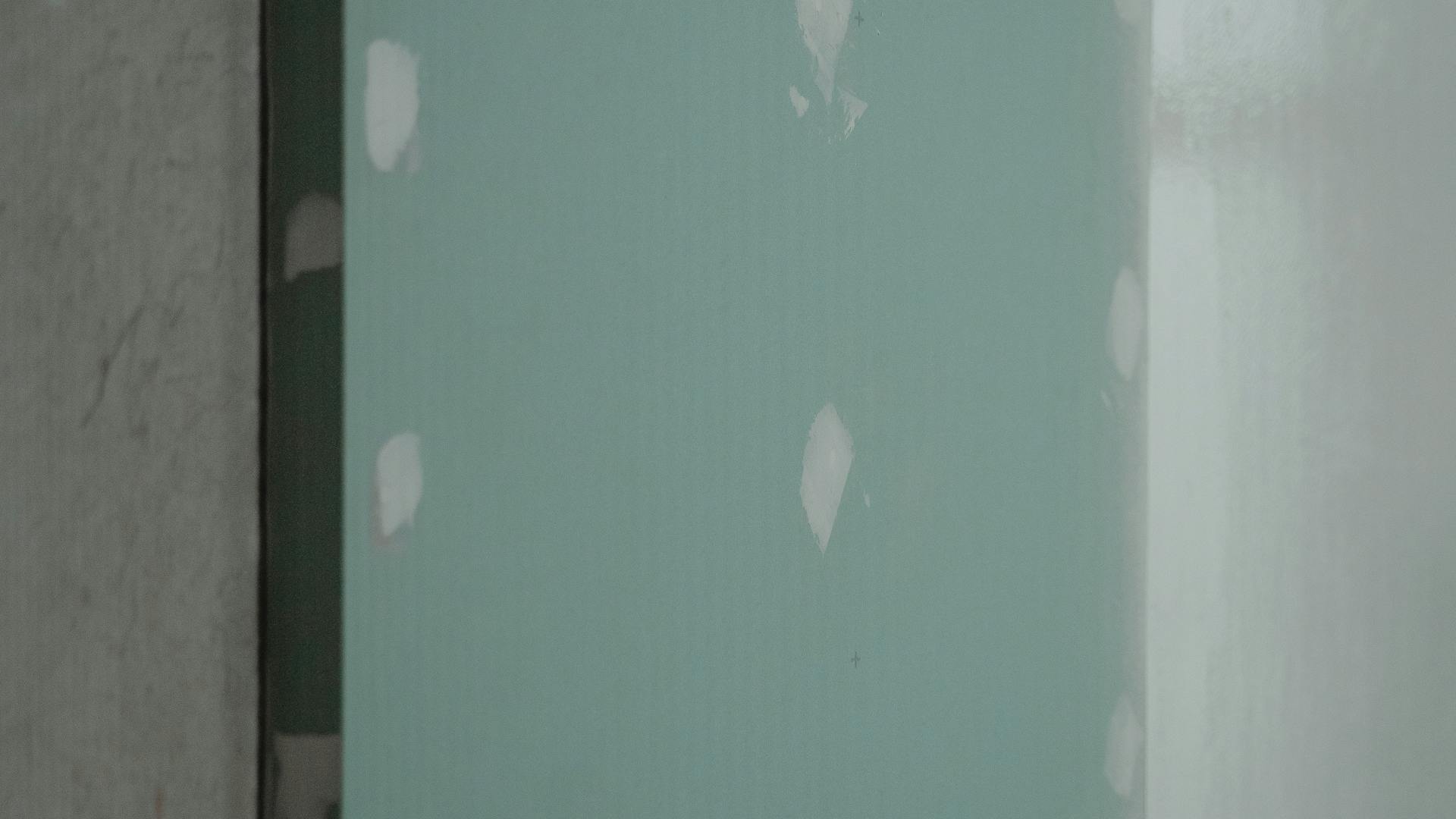
Moisture-resistant drywall — what most people call green board or purple board — uses a water-resistant facing and a treated gypsum core that resists moisture absorption significantly better than standard board. Green board has been the industry standard for wet areas for decades. Purple board takes it further, offering both moisture and mold resistance in a single product. In Prairieville bathrooms and laundry rooms, purple board isn't a luxury upgrade — it's the appropriate material for the environment. Louisiana Residential Code standards actually require moisture-resistant drywall in wet areas. This isn't just a best-practice recommendation; it's code.
Type X fire-rated drywall — five-eighths inch thick — is required by IRC Section R302 in garage-to-living-space walls and ceilings. Every home in Prairieville with an attached garage needs Type X on those shared surfaces. We've walked through houses in Airline Crossing and Prairieville Estates where the previous contractor used half-inch standard board on a garage wall, and the homeowner had no idea they were out of code compliance until they tried to sell and the inspection flagged it.
For any home that experienced flooding — whether in 2016 or any storm since — mold-resistant drywall isn't optional on the replacement. It's the baseline. We source materials locally when possible, working with suppliers including Ascension Building Supply and making runs to the Home Depot on Airline Highway near Gonzales or Lowe's in Gonzales for specific product needs. For larger commercial jobs, we pull from ABC Supply Co. or Ferguson Building Materials in Baton Rouge when the project scope demands it.
Drywall Installation in Prairieville: New Construction and Full Renovations
Prairieville's growth over the last decade has been remarkable. The subdivisions off Hwy 73 keep expanding. Copper Mill, Pelican Point, and the developments near Prairieville High School have brought in thousands of new residents, and with that growth comes a constant stream of new construction drywall work — plus the renovations that follow as homeowners customize their spaces.
New construction drywall installation in Prairieville follows the Louisiana State Uniform Construction Code, which is built on the International Building Code and International Residential Code frameworks. Ascension Parish requires permits for new construction and major renovations through the Ascension Parish Department of Community Development, and permitted drywall work tied to new construction or additions requires a final inspection before a Certificate of Occupancy gets issued. We know this process. We don't cut corners on it, and we don't encourage homeowners to try to avoid it — because unpermitted work creates real problems when you go to sell.
For new builds, our installation process accounts for the climate from the first panel:
- Selecting board thickness and type appropriate to each specific area of the home — not a one-size approach
- Ensuring proper fastener patterns and spacing per IRC requirements to minimize nail pops as the structure settles and moves seasonally
- Paying close attention to seams near exterior walls and ceiling-wall junctions where moisture infiltration is most likely
- Coordinating with the homeowner and general contractor on timing relative to HVAC commissioning — hanging drywall in a house without climate control running in Prairieville's summer heat creates problems with mud drying and joint performance
- Using mold-resistant board in any area with elevated moisture exposure, which in this climate includes more of the house than most people expect
HOA requirements add another layer for homeowners in newer subdivisions. Communities like Copper Mill and Pelican Point commonly require that renovation work be pre-approved and completed by licensed contractors. We're familiar with those requirements and can help homeowners navigate the approval process before work begins.
Drywall Repair in Prairieville: What Actually Needs Fixing
Repair work in Prairieville breaks down into a handful of recurring categories. Some are cosmetic. Some are early warning signs of something bigger. And anything involving water needs to be treated as urgent.
Nail pops. Common throughout Prairieville's older housing stock and even in newer builds after a few years of seasonal cycling. The fix isn't just to drive the nail back in and mud over it — that approach fails within a year. The right drywall repair involves securing the panel with screws on either side of the pop, countersinking the original fastener, and properly feathering the repair so it disappears under paint. Simple in concept. Frequently done wrong.
Hairline cracks and corner cracking. These show up constantly near door frames, window corners, and ceiling-wall joints throughout homes in Galvez, Bluff Dale, and older sections of Prairieville. Most are the result of seasonal movement. A handful are indicators of settling or structural issues that need to be assessed before you tape over them.
Water-damaged drywall. Whether from a roof leak, a plumbing failure, or storm intrusion, water-damaged drywall almost always needs to come out rather than dry in place. Drywall that looks dry on the surface can hold moisture in the gypsum core for weeks. In Prairieville's humidity, that's a mold incubator. We probe and moisture-meter test before we make the call on what stays and what goes.
Post-flood drywall reinstallation. This is its own category entirely. After a flood event, reinstalling drywall below the Base Flood Elevation in Ascension Parish requires compliance with local floodplain management ordinances — including the use of flood-damage-resistant materials. We work within those requirements on every job, and we document the work properly so homeowners have records for their insurance carriers and future buyers.
Finishing Work: Taping, Mudding, Texturing, and More
A drywall job isn't done when the last panel is hung. The finishing sequence — taping, mudding, sanding, priming — is where the quality of the final product gets determined. In Prairieville's climate, it's also where a lot of contractors cut corners that come back to haunt homeowners.
Joint compound — mud — has to dry completely between coats. Not mostly dry. Completely dry. In a Prairieville summer, that can mean running dehumidifiers and fans between coats, or simply waiting longer than the product label suggests. Contractors who rush the drying process end up with joints that crack, bubble, or telegraph through the paint finish within a season. We don't rush it.
Texture application is another area where local knowledge matters. Orange peel, knockdown, skip trowel — the texture patterns common in Prairieville homes each behave differently in high humidity. Getting a texture match right on a repair patch, or applying a consistent texture across a new room, requires experience with how these materials move and set in this specific climate. A patch that looks perfect in a dry climate can look completely wrong here if the applicator doesn't account for how the mud is behaving in the air.
Corner bead installation, sanding, and priming round out the finishing sequence. Every step matters. Corners that aren't properly beaded and mudded crack under seasonal movement. Surfaces that aren't sanded correctly show every imperfection under paint. And drywall that isn't primed before painting — or is primed with the wrong product — won't hold paint the way it should in a humid environment.
Serving Prairieville and the Surrounding Area
Our work in Prairieville is part of a broader footprint across the greater Baton Rouge metro and Ascension Parish. Homeowners in Gonzales and Denham Springs deal with many of the same climate challenges, and we bring the same standards to every job regardless of zip code. For larger projects or customers who want to understand the full scope of what we do across the region, our main Baton Rouge drywall services page covers the complete picture.
If you're in Prairieville and you need drywall work done right — new installation, repair, or anything in between — give us a call. We'll come out, look at what you're dealing with, and give you a straight answer on what it's going to take to fix it properly.
Last updated: