

Drywall Corner Bead Installation Baton Rouge, LA
Corners fail quietly. That's the thing most homeowners don't realize until they're standing in their Broadmoor living room staring at a crack running straight down what should be a crisp, clean edge — or watching a strip of metal corner bead pull away from the wall in a Shenandoah bathroom that's seen one too many humid Louisiana summers. Corner bead installation looks simple from the outside. Nail it up, mud it over, sand it smooth. But the difference between a corner that holds for thirty years and one that starts cracking inside of eighteen months comes down to material selection, fastening method, mud application, and a real understanding of what this climate does to finished walls over time.
We've handled drywall installation and corner bead work across dozens of neighborhoods in this city — from older Mid City shotgun renovations where foundation settling has already stressed every seam in the house, to new construction builds going up near the Towne Center at Cedar Lodge where contractors need clean Level 5 finishes before the painters show up. The work is different in every situation. But the pressure this climate puts on corners is consistent everywhere we go. Baton Rouge averages over 60 inches of rain annually. The humidity sits between 75 and 90 percent for most of the year. HVAC systems run almost without stopping, cycling warm humid air against cool interior walls and creating the kind of condensation conditions that eat through poorly installed corner systems faster than anything else we see in the field.
Corner bead is the unsung piece of a drywall system. It protects every outside corner in the structure — the edges of doorways, the transitions between walls, the outside corners of soffits, the archways in older Garden District homes, the garage-to-living-space corners that require fire-rated assemblies under the IRC as adopted by Louisiana. Get it right and it disappears into the finished wall. Get it wrong and it announces itself every single time: cracking compound, chipped paint, visible separation, or worst of all, the soft spongy failure that means moisture has been living behind that corner for months.
This page covers everything about professional drywall corner bead installation in Baton Rouge, LA — the material types, the installation methods, the local factors that change how we approach the work, and what to expect when you hire a qualified corner bead installation contractor in Baton Rouge who actually knows this market.
Why Corner Bead Matters More in Baton Rouge Than Almost Anywhere Else
Most of the country deals with corner bead failures from impact damage and settling. Standard stuff. In Baton Rouge, we deal with all of that plus a subtropical climate that is genuinely hostile to drywall systems that weren't installed with local conditions in mind. The August 2016 flood displaced tens of thousands of families across East Baton Rouge Parish. Hurricane Ida in 2021 punched through roofs and pushed water into walls from Tara to University Hills. In both cases, corners were among the first places failures showed up during rebuild work — not always because of direct water contact, but because moisture-compromised corner bead loses its bond to the substrate and the joint compound around it starts to crack and crumble.
Thermal expansion is another factor that gets underestimated here. When temperatures regularly exceed 95°F with heat index values above 110°F through July and August, then drop to near-freezing during the occasional winter ice event, the materials inside your walls are expanding and contracting in ways that stress every fastened connection in the assembly. Metal corner bead — particularly standard galvanized steel — moves differently than the drywall substrate it's attached to. Over time, in a climate like ours, that differential movement shows up as hairline cracking along the bead edges. It looks like a finishing problem. It's actually a materials and installation problem underneath.
And then there's the soil. The clay-heavy soils throughout Baton Rouge are notorious for subsidence. Foundation settling in older neighborhoods like Mid City and the Garden District is ongoing, not a one-time event. We've walked into homes on streets off Government Street and found corner bead that had been re-mudded two or three times by previous contractors who kept treating the symptom — the cracked compound — without addressing the fact that the corner itself had shifted and needed to be refastened or replaced entirely before any new mud work would hold.
Types of Corner Bead: What We Actually Use and Why
There are four main corner bead types you'll encounter in residential and light commercial work in Baton Rouge. Each has a place. None of them is universally right for every application, and any contractor who installs the same product everywhere isn't paying close enough attention to the job.
- Metal corner bead (galvanized steel): The traditional choice. Metal corner bead for drywall in Baton Rouge still gets used regularly on standard 90-degree outside corners in low-moisture interior spaces. It's durable, holds a clean edge, and takes joint compound well. The tradeoff in our climate is corrosion risk in high-humidity areas. We don't use standard galvanized metal in bathrooms, utility rooms, or anywhere near exterior walls without a robust vapor barrier behind the drywall — the rust bleeds through joint compound and paint within a year or two in the wrong conditions. When we do use metal, we're typically sourcing it through ABC Supply Co. on Plank Road or Builders FirstSource on Airline Highway, both of which carry commercial-grade stock that holds tighter tolerances than the big-box options.
- Vinyl corner bead: Vinyl corner bead installation in Louisiana has become increasingly common in our market for good reason. PVC doesn't rust. Full stop. In a climate where humidity is a daily reality and moisture intrusion is a when-not-if proposition, vinyl corner bead in bathrooms, kitchens, laundry rooms, and any exterior-adjacent wall eliminates one of the most common failure modes we see. It's slightly more flexible than metal, which actually works in its favor on structures experiencing foundation movement — it can accommodate minor shifts without cracking the compound the way rigid metal will. Installation requires crimping or stapling rather than nailing, which changes the fastening approach, but the long-term performance in Baton Rouge conditions makes it worth the adjustment.
- Paper-faced corner bead: Paper-faced bead is our go-to for archways, curved transitions, and any application where the corner isn't a true 90 degrees. A lot of the older homes in Bocage and Southdowns have arched doorways and rounded soffits that were built with plaster, and when those get converted to drywall during renovations, paper-faced archway corner bead is what gives you a smooth, crack-resistant finish. It embeds directly into the joint compound rather than sitting on top of the substrate, which means there's no metal edge to telegraph through the finish coats. The tradeoff is that it requires more precise mud work to build up properly — you can't rush the coat schedule with paper-faced bead or you'll end up with ridges.
- Bullnose corner bead: Bullnose corner bead creates that rounded-edge look that was extremely popular in Baton Rouge new construction through the late 1990s and 2000s. A lot of the homes in Sherwood Forest, Kleinpeter, and the developments around the Perkins Rowe area were built with bullnose throughout. We still install it on new work when clients want that aesthetic, and we do a significant amount of corner bead repair work on existing bullnose corners that have been damaged or compromised. Matching the radius on repairs requires having the right profile on hand — not something every contractor stocks, but something we carry specifically because the demand in this market is consistent.
How Professional Corner Bead Installation Actually Works
The installation process has more steps than most people expect. It's not just nailing up a strip of metal and burying it in mud. Each stage matters, and skipping or rushing any of them is where the failures start.
Substrate preparation comes first. The drywall edges at every corner need to be flush, properly fastened, and free of any high spots or paper tears that would prevent the bead from sitting flat. If we're working on a corner bead replacement after water damage — which is common after the kind of flooding events Baton Rouge has experienced — we're also checking that the replacement drywall is fully dried and that there's no residual moisture in the framing before anything goes up. We use a moisture meter on every water damage job. Non-negotiable.
Bead selection and cutting is where material knowledge matters. Standard 8-foot and 10-foot lengths need to be cut cleanly at the top and bottom of each corner run, mitered properly at inside corners, and notched where bead sections meet. Sloppy cuts create gaps that fill with mud but never bond properly — those are the corners that crack along the edge six months after the job is done.
Fastening methods vary by bead type. Metal bead gets nailed or screwed through the flanges into the framing or drywall — we prefer screws in Baton Rouge because nails have more tendency to pop in structures experiencing thermal movement or settling, and we see a lot of both here. Vinyl bead gets crimped with a corner bead crimper or stapled with a pneumatic stapler. Paper-faced bead gets embedded directly into a wet coat of all-purpose joint compound, pressed flat, and skim-coated before it has a chance to dry unevenly. Each method has a specific tool requirement and a specific technique, and using the wrong fastening approach for the bead type is one of the more common mistakes we see on work that comes back to us for repair.
Corner bead mudding and finishing is where the quality of the final product gets determined. Proper mudding requires attention to coat scheduling that's different from what you'd apply in a drier climate. Joint compound dries by evaporation. In Baton Rouge's humidity, that process slows significantly, and applying a second coat before the first is fully cured is a reliable path to cracking and adhesion failure. What any experienced finisher in this market knows is that you cannot rush the coat schedule here the way you might in Phoenix or Denver. We typically run three coats on corner bead: a base coat that beds the bead and fills the flanges, a fill coat that builds the surface flush, and a finish coat that gets feathered out 6 to 8 inches on each side of the corner for a smooth, invisible transition into the flat wall surface.
The feathering technique on that final coat is what separates a professional finish from work that looks like it was done by someone who learned from a YouTube video. The compound needs to be thinned appropriately for the humidity conditions on the day of application — thicker during the rare dry spells, thinner when the humidity is running high — and applied with long, confident strokes that blend the corner into the flat wall without ridges or tool marks. Sand that finish coat properly and you've got a corner that takes paint like flat wall surface. Rush it, and you'll be back in six months.
Corner Bead and the Broader Drywall System
Corner bead doesn't exist in isolation. It's one component in a system, and how well it performs depends heavily on the quality of everything around it. Panels that aren't properly fastened will flex and transfer stress to the corner. Tape and joint work that wasn't done correctly will crack at the seams before the corner ever becomes an issue. And texture applied over a corner that wasn't properly finished will telegraph every imperfection straight through to the painted surface.
That's why we approach corner bead as part of the full scope, not a standalone task. When a customer calls us about a failing corner in their Tara home, we're not just looking at the bead — we're looking at the panel behind it, the fastening pattern, the tape joints nearby, and whether there's any moisture history in that wall cavity. A corner that keeps failing is almost never just a corner problem.
For projects that involve patching damaged sections alongside corner work, we coordinate both scopes so the mud schedules align and the finish coats go on at the same time. That's the only way to get a consistent sheen across the repaired area — staggered finish coats dry at different rates and catch light differently, and in a room with natural light coming through south-facing windows, that inconsistency shows up immediately after the first coat of paint goes on.
What to Expect When You Hire Us
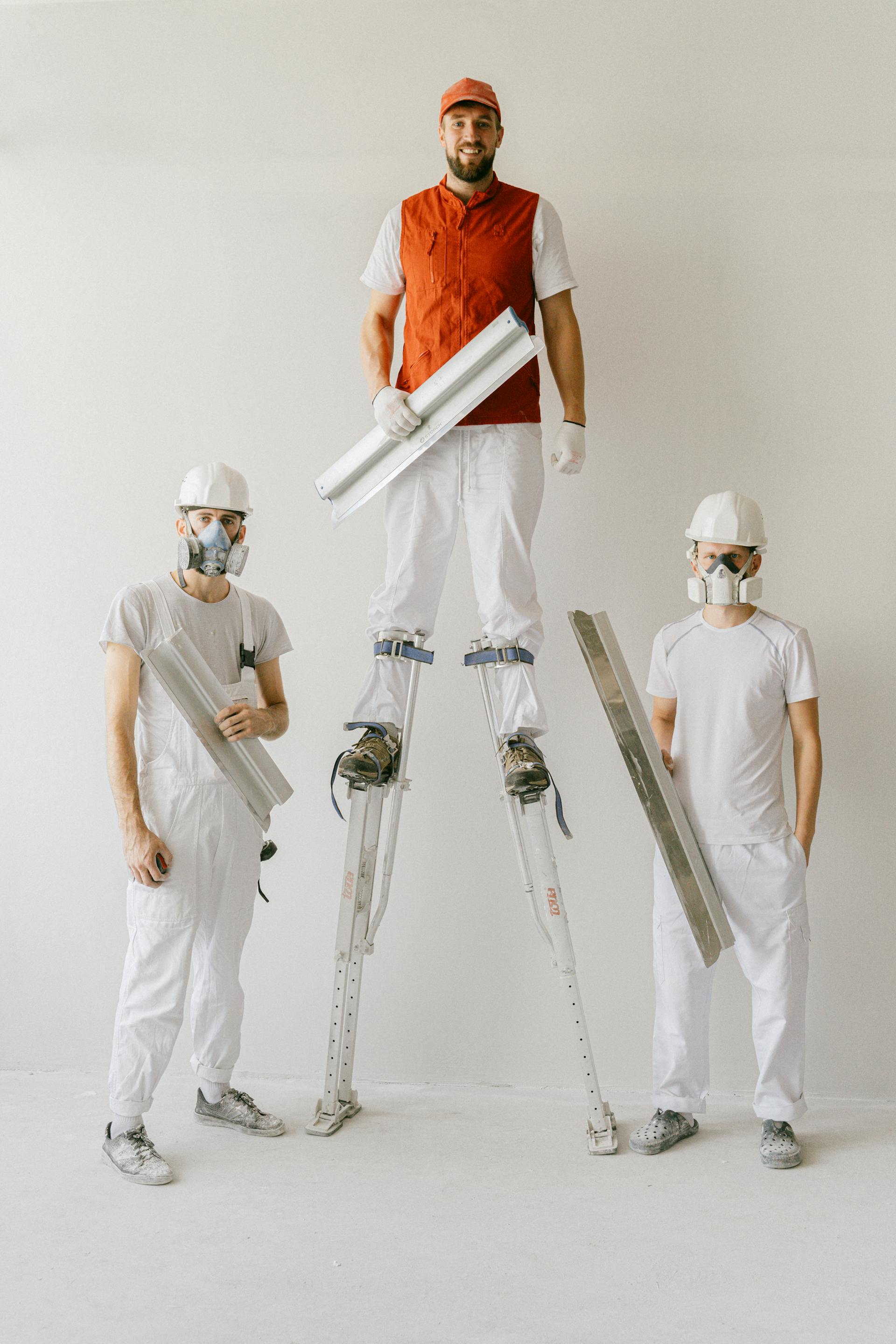
We show up on time, we bring the right materials for the specific job, and we don't cut corners — literally or figuratively. Every drywall corner bead installation in Baton Rouge we do starts with a walkthrough of the space so we understand what we're working with: the age of the structure, the history of any water events, the existing bead profiles if we're doing repair work, and what the finish expectation is before we leave.
Pricing is straightforward. We quote by the linear foot for new installation and by the repair on existing work, with material costs itemized separately so you know exactly what you're paying for. We don't pad material invoices and we don't quote low to win the job and then find reasons to add charges once we're on site.
If you've got a corner that's been cracking, separating, or just looks like it was never finished properly, or if you're building out a new space and want it done right the first time, reach out. We cover all of Baton Rouge and the surrounding parishes, and we're familiar with the specific challenges that come with this climate, these soils, and these structures. Our broader drywall services in Baton Rouge cover everything from new installation to finish work, and corner bead is something we handle on every single job — because in this city, it matters.
Last updated: