

Drywall Installation Baton Rouge, LA
A blank set of walls is where everything starts. Before the paint, before the trim, before the furniture gets moved in — there's drywall, and in Baton Rouge, getting it right from the beginning is the difference between a finished space that holds up for decades and one that's showing bubbled tape and soft spots before the first summer is over. We've done drywall work across Baton Rouge long enough to know that this city puts material through conditions most of the country never deals with. What works fine in Dallas or Atlanta doesn't always cut it here.
The humidity alone changes the math. Averaging somewhere between 75 and 85% year-round, Baton Rouge air is relentless — and standard drywall absorbs moisture the way a sponge does. Homes in Mid City, older builds near the Goodwood corridor, and properties close to the Bluebonnet Swamp area deal with persistent moisture infiltration that standard half-inch board simply wasn't designed to handle long-term. That's not a scare tactic. It's just the reality of doing this work here, and it shapes every material decision we make before a single sheet goes up.
Whether it's a new construction project going up near the Pennington Biomedical Research Center corridor, a full gut-and-rebuild after flood damage in Broadmoor, or a commercial buildout along Airline Highway near Cortana, the fundamentals of a solid installation don't change — but the product selection, the prep work, and the finishing approach absolutely do depending on what the space demands.
What Drywall Installation Actually Involves
A lot of homeowners picture drywall installation as the straightforward part of a renovation. Screw some sheets to studs, tape the joints, done. The basic sequence isn't complicated. But execution at a professional level involves considerably more than that, and skipping steps creates problems that show up six months later when you're staring at cracked tape or a joint line that telegraphs through two coats of paint.
Here's what a complete drywall installation project actually covers:
- Framing inspection and prep — Before a single sheet goes up, the framing needs to be right. Studs need to be plumb, properly spaced at 16 or 24 inches on center, and free of moisture damage. In Baton Rouge especially, Formosan termite activity can quietly compromise wall framing behind existing drywall — we've opened walls in Shenandoah and Tara that looked fine from the outside and found framing that needed full replacement before any new board could go in. You can't skip this step.
- Material selection — Half-inch standard drywall, five-eighths Type X fire-rated board, moisture-resistant greenboard, paperless drywall, mold-resistant purple board. The right product depends on the room, the location in the building, and local code requirements. Garages adjacent to living spaces in East Baton Rouge Parish require five-eighths Type X drywall per Louisiana State Uniform Construction Code fire-resistance requirements. Bathrooms and exterior walls in flood zone properties along the Amite and Comite River corridors need flood-resistant, moisture-resistant materials below Base Flood Elevation per FEMA guidelines. These aren't optional upgrades — they're code.
- Drywall hanging — Sheets get measured, cut, and fastened to framing using screws at the proper spacing. Horizontal vs. vertical orientation matters depending on wall height and structural requirements. Butt joints get staggered. Seams land on studs. Cutouts for electrical boxes, outlets, and fixtures get marked and cut cleanly. This part moves fast when it's done right, and it shows when it isn't.
- Taping and mudding — Paper tape or mesh tape over every joint and screw dimple, followed by multiple coats of joint compound. Each coat needs adequate dry time before the next goes on. In Baton Rouge summers — where heat index regularly pushes past 105°F — mud can skin over on the surface while staying wet underneath, which causes cracking. We account for that. Rushing the mud coats is one of the most common reasons drywall jobs fail early.
- Sanding and finishing — Final sanding brings everything flush and smooth. The finish level matters: a Level 4 finish is standard for most painted walls, while Level 5 is used under high-gloss paint or in spaces with critical lighting. Garages and utility spaces often get a Level 3. Getting the finish level right for the application saves paint and avoids do-overs.
- Permits and inspections — Drywall installation that's part of a new construction or larger renovation in East Baton Rouge Parish typically requires a building permit through the City-Parish Department of Development. Post-flood repair work may require permits even for like-for-like replacement if damage exceeds 50% of the structure's value under FEMA substantial improvement rules. We handle the permit process — it's not something homeowners should be navigating alone mid-project.
New Construction Drywall Installation in Baton Rouge
New builds move on a schedule. Framers finish, rough-in electrical and plumbing get inspected, insulation goes in — and then the drywall crew needs to show up and execute cleanly so the rest of the trades can follow. Delays at the drywall stage ripple through the entire project timeline. We've worked on new construction across Baton Rouge from subdivisions in Kleinpeter and the Sherwood Forest area out to developments near the Mall of Louisiana on Bluebonnet Boulevard, and the one constant is that general contractors need a crew who shows up when they say they will and finishes what they start.
New construction in this region also means making smart decisions at the spec stage. Louisiana's Energy Code — based on the IECC — requires R-13 minimum insulation in exterior walls when drywall is removed and replaced, and those requirements apply to new builds too. Exterior walls in Baton Rouge's climate benefit from moisture-resistant drywall as a baseline, not an upgrade. We spec accordingly and source material locally through suppliers like ABC Supply Co. on Choctaw Drive, Builders FirstSource, and 84 Lumber on Airline Highway — which keeps lead times manageable and helps us stay on schedule.
Five-eighths inch Type X fire-rated drywall is required in garages adjacent to living spaces. This isn't a judgment call — it's Louisiana State Uniform Construction Code, and inspectors in East Baton Rouge Parish check for it. We also see it specified in fire-rated wall assemblies in commercial new construction, multi-family projects, and anywhere the IBC requires a rated assembly. Using the right board in the right location the first time avoids failed inspections and expensive re-dos.
Residential Drywall Installation Across East Baton Rouge Parish
Residential drywall installation in Baton Rouge covers a wide range of project types. Full new construction. Room additions. Garage conversions, sunroom additions, attic buildouts, and whole-house renovations. And then there's the category that keeps residential drywall contractors consistently busy in this city: post-flood and post-storm replacement.
The August 2016 flood hit East Baton Rouge Parish harder than most people outside Louisiana fully understood. Tens of thousands of homes took on water. Drywall absorbs floodwater and becomes a total loss — it can't be dried out and reused. The mold growth that follows in Baton Rouge's humidity moves fast. Neighborhoods like Broadmoor, parts of Tara, and low-lying areas throughout the parish saw complete gut-and-reinstall jobs on nearly every affected home. We worked through that period alongside homeowners dealing with insurance adjusters, FEMA documentation, and contractor availability all at once. It was a hard stretch for this city.
That experience shaped how we approach flood-zone residential work today. Properties in designated flood zones along the Amite and Comite River corridors require flood-resistant construction materials below Base Flood Elevation — and moisture-resistant or paperless drywall is the right spec for those applications. Paperless drywall uses a fiberglass mat facing instead of paper, which eliminates the food source mold needs to establish itself. In a city with Baton Rouge's humidity profile, it's worth the modest cost difference in any space with elevated moisture exposure. If you're dealing with damage from a past event, our drywall repair services cover everything from isolated patch work to full room replacements.
HOAs in communities like Bocage, Tara, and Shenandoah add another layer to residential projects. Most require contractor licensing verification before work begins, and many restrict work hours — typically weekdays from 7am to 6pm and Saturdays from 8am to 5pm. We're familiar with those requirements and build them into project scheduling from the start. Nothing creates friction with a homeowner faster than a noise complaint from the HOA on day two of a job.
Commercial Drywall Installation in Baton Rouge, LA
Commercial drywall installation in Baton Rouge runs the full spectrum — medical office buildouts near Our Lady of the Lake Regional Medical Center and Baton Rouge General on Florida Boulevard, retail tenant improvements at Perkins Rowe and Towne Center at Cedar Lodge, restaurant and hospitality spaces, school and university facilities near LSU Campus, and light industrial. Each category has its own demands.
Medical and healthcare spaces require careful attention to fire-rated assemblies, infection control protocols during construction, and coordination with other trades in occupied buildings. Retail buildouts live and die by schedule — a tenant improvement that misses its delivery date costs the client real money in lost lease days. We've done enough commercial work in this market to understand that showing up, communicating clearly, and finishing on time isn't a differentiator. It's the baseline expectation.
Commercial drywall installation in East Baton Rouge Parish is subject to the full IBC framework under the Louisiana State Uniform Construction Code. Fire-rated assemblies, shaft walls, corridor separations, stairwell enclosures — these all require specific board types, fastener patterns, and installation methods that get inspected. There's no shortcutting rated assemblies. The Louisiana State Licensing Board for Contractors requires drywall contractors performing work over $75,000 to hold a state contractor's license — and for commercial projects, that threshold gets crossed quickly. We're properly licensed and carry the documentation to prove it.
Moisture-Resistant Drywall Installation in Baton Rouge
This is the conversation we have on nearly every job. Standard drywall has a paper facing, and paper is organic material — which means in a humid environment, it supports mold growth when moisture is consistently present. Baton Rouge's climate makes moisture-resistant drywall a practical necessity across a broader range of applications than most markets ever consider.
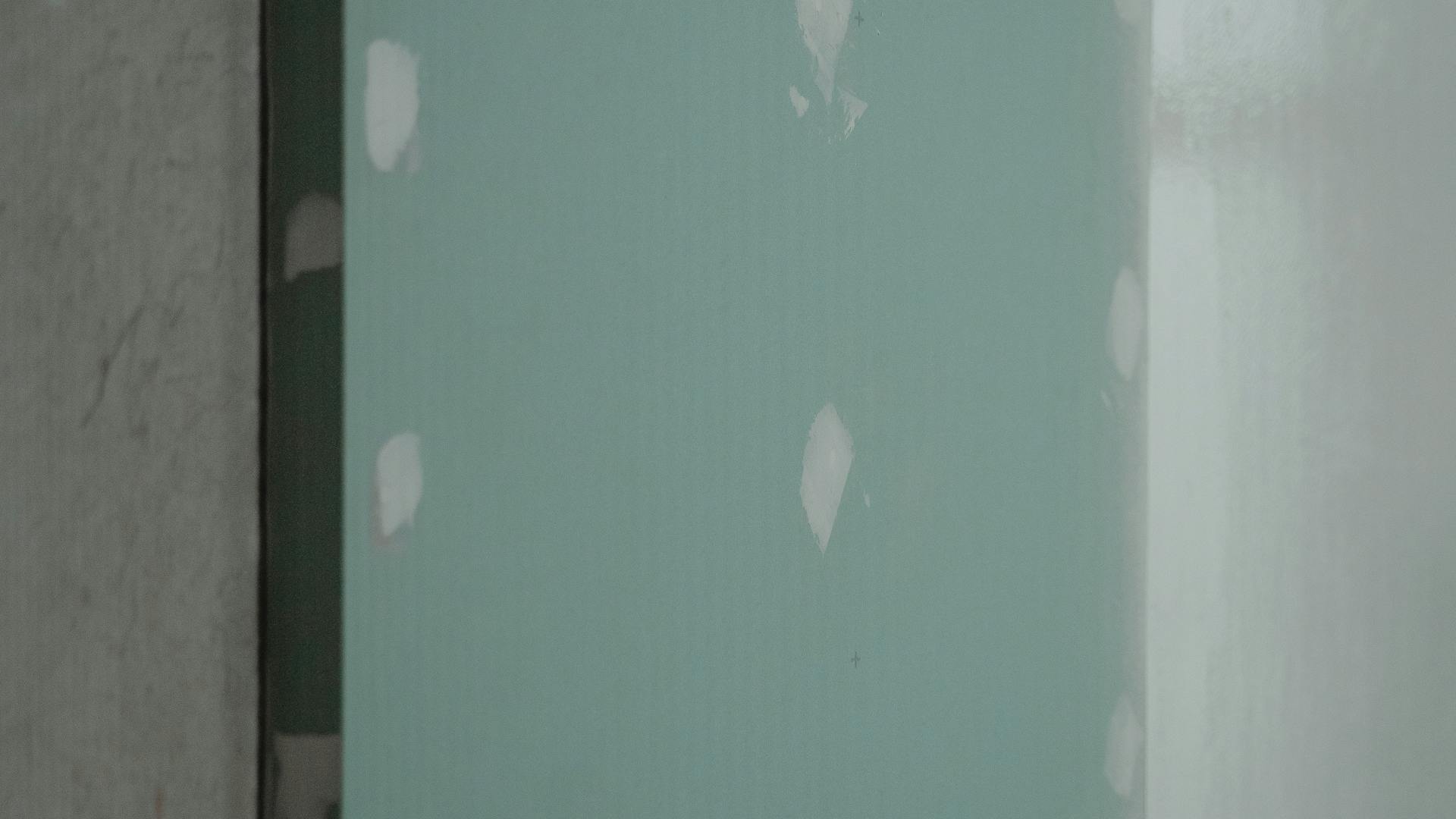
Bathrooms are obvious. But exterior walls in older homes without adequate vapor management, utility rooms, laundry rooms, spaces above garages, and any room that's had previous water intrusion from roof leaks or pipe failures — all of these benefit from moisture-resistant or mold-resistant board. The product options have expanded significantly: traditional greenboard offers basic moisture resistance, purple board (Georgia-Pacific DensArmor and similar products) offers mold resistance with a fiberglass mat facing, and paperless drywall goes further by eliminating the paper facing entirely. For spaces that have seen repeated water issues, the upgrade cost is minimal compared to the cost of coming back to repair damaged drywall a year later.
If you're not sure which product is right for your project, that's a normal question — and the answer depends on the specific room, its moisture exposure history, and how the space is used. We walk through that with every homeowner before material gets ordered. Getting the spec right upfront is the whole job. Everything else is just execution.
For a full look at what we do across the area, visit our Baton Rouge drywall services page — or reach out directly to talk through your project. We're local, we're licensed, and we know this market.
Last updated: