

Drywall Mudding Baton Rouge, LA
Mud is where the craft lives. You can hang a thousand sheets of drywall and still end up with walls that look like they were finished by someone who gave up halfway through — because the hanging is the easy part. The mudding is where a professional separates from a guy with a bucket and a putty knife. In Baton Rouge, that distinction matters more than it does almost anywhere else in the country, and if you've ever watched a fresh coat of joint compound bubble, crack, or pull away from the tape on a humid August afternoon off Airline Highway, you already know why.
This city is genuinely hard on finish work. The relative humidity in East Baton Rouge Parish sits above 75% on average — and that's the average. On a typical summer morning in Broadmoor or Mid City, you're looking at 88%, 90%, sometimes higher before noon. Joint compound is water-based. It dries by releasing moisture into the surrounding air. When the air is already saturated, that process slows down, stalls out, or goes sideways entirely. Mud that should be ready for a second coat in 24 hours might still be soft at 48. And if you rush it — if you coat over compound that hasn't fully cured — you're building a wall that's going to fail. Maybe not today. Maybe not until the next August rolls around and the humidity spikes again. But it'll fail.
We've handled drywall work across Baton Rouge for years, from older Creole cottages in the Garden District that haven't seen fresh compound since the Carter administration to new construction going up in Shenandoah and Kleinpeter. Every single one of those jobs required us to think about the climate before we thought about anything else. That's not an exaggeration — it's just the reality of doing this work in South Louisiana.
What Drywall Mudding Actually Involves
The term "drywall mudding" covers a specific set of processes that take raw drywall panels from rough-hung sheets to walls that are ready for paint or texture. It's not one step. It's a sequence of applications, each one building on the last, each one requiring the previous coat to be fully dry, properly sanded, and free of defects before you move forward.
Here's how a proper mudding sequence works in practice:
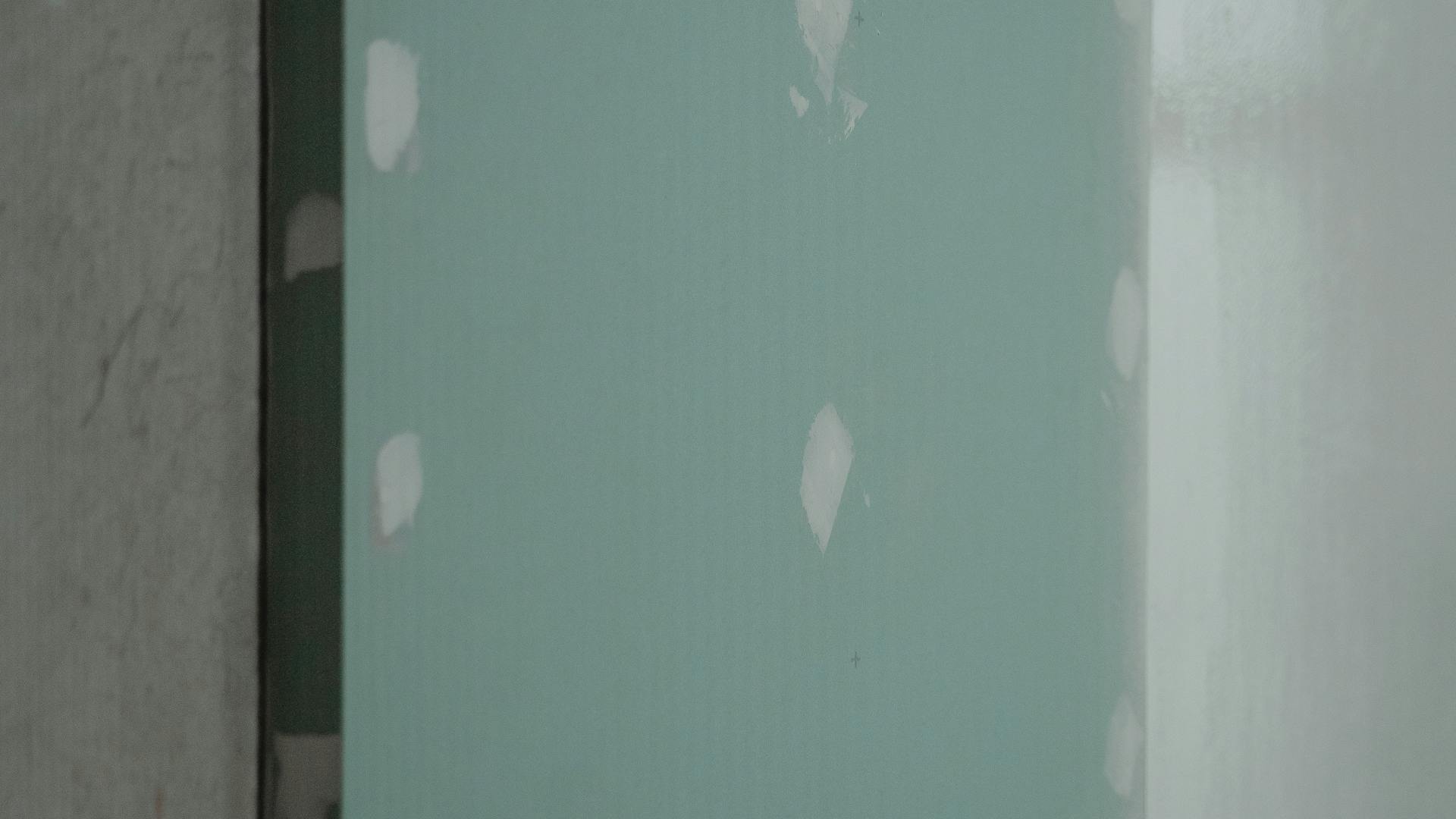
- Taping coat (first coat): Joint compound — typically a setting-type compound, what most professionals call "hot mud" — gets applied over every seam, every butt joint, every inside and outside corner, and every fastener dimple. Mesh or paper tape gets embedded into the wet compound at the seams. This coat isn't meant to look good. It's structural. It's locking the tape in place and filling the void.
- Second coat (blocking coat): Once the first coat has fully cured and been lightly sanded, a wider application of pre-mixed all-purpose or topping compound goes on. The goal here is to begin feathering — extending the edges of the mud out beyond the seam so the transition becomes gradual rather than abrupt. On tapered joints, where the factory edges of two sheets meet and create a natural recess, this is straightforward. On butt joints — where two cut or factory-end edges meet without any recess — it's more demanding. You're building up compound over a flat surface and feathering it out 10 to 12 inches on each side to make it disappear.
- Finish coat (third coat and beyond): This is where topping compound comes in. Thinner consistency, smoother application, wider feathering. A skilled finisher will sometimes add a fourth coat on butt joints or in areas where the light will hit the wall at a sharp angle — what crews call "raking light" situations. Anywhere near a window, under a pendant fixture, along a wall that runs parallel to a strong light source. Those spots will show every imperfection.
- Skim coating: On walls that need a Level 5 finish — required under high-gloss paint, in rooms with heavy raking light, or wherever the client needs a truly flawless surface — a thin skim coat of topping compound gets applied over the entire wall, not just the seams. Skim coating is its own skill set. It's fast, it's demanding, and done wrong it looks worse than not doing it at all.
The finishing levels themselves are worth understanding. The drywall industry uses a standardized scale from Level 0 through Level 5. Level 0 is bare hung drywall — no finishing at all, used in temporary construction. Level 1 is tape embedded in compound with no finish coats, used in attics and areas that won't be seen. Level 2 adds a skim coat over the tape and is typical for tile substrates. Level 3 adds one finish coat and is appropriate for heavy texture applications. Level 4 is the standard residential finish — tape plus two finish coats — suitable for flat or eggshell paint. Level 5 is the full skim coat over the entire surface, required for any high-sheen paint or situation where the walls will be scrutinized up close.
Most homes in University Hills, Tara, and Bocage are finished to Level 4. Custom builds and renovations targeting a higher-end result — especially rooms with large windows or open-plan layouts where the light travels far across the walls — typically spec Level 5. We'll always walk through the space before we start and flag any areas where the finish level needs to be bumped up. It's a conversation worth having before the mud goes on, not after the paint does.
Setting Compound vs. Pre-Mixed: The Right Tool for Baton Rouge's Climate
This is one of the decisions that separates competent mudding from truly professional work, especially here. There are two broad categories of joint compound: setting-type compounds and pre-mixed compounds. They behave completely differently, and in Baton Rouge's climate, knowing when to use each one is critical.
Setting-type compounds — sold under names like Durabond or Easy Sand, available at the Home Depot on Siegen Lane, Lowe's on Airline Highway, or through supply houses like ABC Supply Co. and Builders FirstSource — cure through a chemical reaction, not through evaporation. You mix them from powder, and they harden regardless of humidity. That's enormously useful in this climate. A 45-minute setting compound will be hard in roughly 45 minutes whether it's 90% humidity or 50%. That reliability matters on a job site in July in Sherwood Forest where the air feels like warm soup.
But setting compounds are unforgiving. Once they kick, they're done. You can't re-wet them, you can't feather them out, and they're significantly harder to sand than pre-mixed. They're the right choice for the taping coat — the structural first application — and for filling large voids or gaps. They're not the right choice for finish coats, where workability and a fine, sandable texture are what you need.
Pre-mixed all-purpose and topping compounds are what most finishers reach for on coats two and three. They stay workable, they feather well, and they sand to a smooth surface. The tradeoff is drying time. In Baton Rouge's humidity, a thick application of pre-mixed compound can take 36 to 48 hours to fully dry — longer if there's no climate control in the space. We've walked into jobs in Mid City in August where compound applied two days earlier was still soft in the center of a thick application. That's not a product failure. That's physics. The solution is thinner coats, more of them, with patience between each one.
That patience — the willingness to wait for compound to actually cure before moving forward — is one of the things that distinguishes a professional mudding job from a rushed one. Homeowners don't always want to hear it. General contractors on tight schedules really don't want to hear it. But coating over wet mud creates a wall that will crack, bubble, and fail. We'd rather have that conversation upfront than come back to fix it later. It's the same reason our taping process follows the same disciplined approach — every phase of finish work in this climate rewards patience and punishes shortcuts.
Why Baton Rouge's Climate Creates Specific Mudding Challenges
The humidity is the obvious one, and we've covered it. But there are a handful of other climate-specific factors that affect drywall mudding work in this city that don't get talked about enough.
The heat is a real problem in summer. When temperatures push past 95°F and the heat index climbs above 105°F — which happens regularly from June through September — joint compound on the surface of a wall can skin over and begin drying before the compound underneath has had a chance to cure. That creates a situation where the surface looks dry but the interior is still wet and soft. Sand it too soon and you're pulling up compound that hasn't bonded properly. Leave it and coat over it and you may end up with hollow spots under the finish coat that will eventually crack or telegraph through the paint. Working in shaded, ventilated spaces and keeping mud out of direct sunlight during application helps. So does working earlier in the day before temperatures peak.
Foundation movement is another factor that doesn't come up enough in conversations about drywall finishing. Baton Rouge sits on expansive clay soils. Those soils shrink and swell with moisture changes — and in a city that gets soaked by afternoon thunderstorms from spring through fall and then bakes dry in between, that movement is constant and cumulative. Older homes in neighborhoods like Old Jefferson and parts of Mid City show it clearly: cracks running diagonally from door corners, seams that have opened up along the ceiling line, corner bead that's pulled away from the wall. Mudding over those areas without addressing the underlying movement is a temporary fix at best. What we tell customers in those situations is that the mud is the last step, not the first. If the framing is moving, we need to understand why before we start applying finish coats. In many of those cases, the right starting point is targeted drywall repair to stabilize the problem areas before any finish work begins.
The August 2016 flood reshaped the drywall industry in this city in ways that are still visible today. Tens of thousands of homes across East Baton Rouge Parish — in Broadmoor, Sherwood Forest, Shenandoah, and dozens of other neighborhoods — took on water and required complete drywall removal and replacement. The remediation work that followed created enormous demand for every phase of drywall work, mudding included. It also reinforced something that experienced contractors already knew: in flood-affected spaces, the substrate matters as much as the finish. Homes rebuilt after the flood that used moisture-resistant or mold-resistant drywall — the green board and purple board products available at any of the local supply houses — hold up better in subsequent humidity events than homes that went back in with standard board. That's a lesson that informed how we approach every installation job we take on in flood-prone areas of the parish.
Hurricane Ida in 2021 added another chapter to that story. Wind-driven water intrusion, roof failures, and flooding from the Amite River basin brought water into walls that had been properly finished and painted for years. The damage we saw in the aftermath — delaminated tape, swollen compound, mold behind finished surfaces that looked intact from the outside — underscored why the mudding process in this climate has to be done correctly from the start. A properly applied, fully cured mud job with appropriate primer and paint over it is genuinely more resilient than a rushed one. That's not a sales pitch. It's what we've seen on actual job sites after actual storms.
Permits, Code, and What You Need to Know Before Work Starts
East Baton Rouge Parish enforces the Louisiana State Uniform Construction Code, which is built on the International Building Code and the International Residential Code. For drywall work specifically, IRC Section R702 governs interior wall and ceiling finishes. Most straightforward mudding work — finishing drywall that's already been hung and inspected — doesn't require a separate permit. But if the mudding is part of a larger scope that includes patching after structural repairs, room additions, or any work that touches fire-rated assemblies, the permit picture changes. When in doubt, we check with the City-Parish Planning Commission before work starts, not after.
Last updated: