

Drywall Patching Baton Rouge, LA
A hole in your drywall has a way of becoming the only thing you see. Could be a doorknob that swung too hard in a Sherwood Forest ranch house. Could be the plumber who cut an access panel in your Mid City bathroom and left you with a ragged eight-inch gap where smooth wall used to be. Could be the slow leak behind the vanity in your Bocage home that nobody noticed until the paper face started bubbling and the whole section went soft. Whatever put it there, the damage is done — and now you need someone who can make it disappear.
That's exactly what professional drywall patching does. Not just filling a hole. Not slapping a mesh patch kit over the problem and calling it a day. Real patch repair in Baton Rouge means matching your existing texture, feathering the joint compound out wide enough that the repair dissolves into the surrounding wall, and leaving you with a surface that's genuinely paint-ready — the kind of finish where you can't find the patch even when you're looking for it.
We've handled dozens of patching calls across East Baton Rouge Parish, from quick nail pop repairs in University Hills condos to full-section replacements in Broadmoor homes that took on water during a flash flood event. The size of the damage doesn't matter as much as people think. What matters is the process — and in this climate, the materials.
Baton Rouge's subtropical environment is genuinely brutal on drywall. Humidity averaging 75 to 85 percent year-round isn't a minor inconvenience — it's an active threat. Standard paper-faced drywall absorbs moisture the way a sponge does, and once the paper face starts to degrade, the gypsum core follows. We see it constantly: a homeowner patches a water-damaged section with whatever was on sale at the Home Depot on Siegen Lane, paints over it, and six months later the patch is bubbling, soft at the edges, and starting to smell. The original problem wasn't fixed. It was covered.
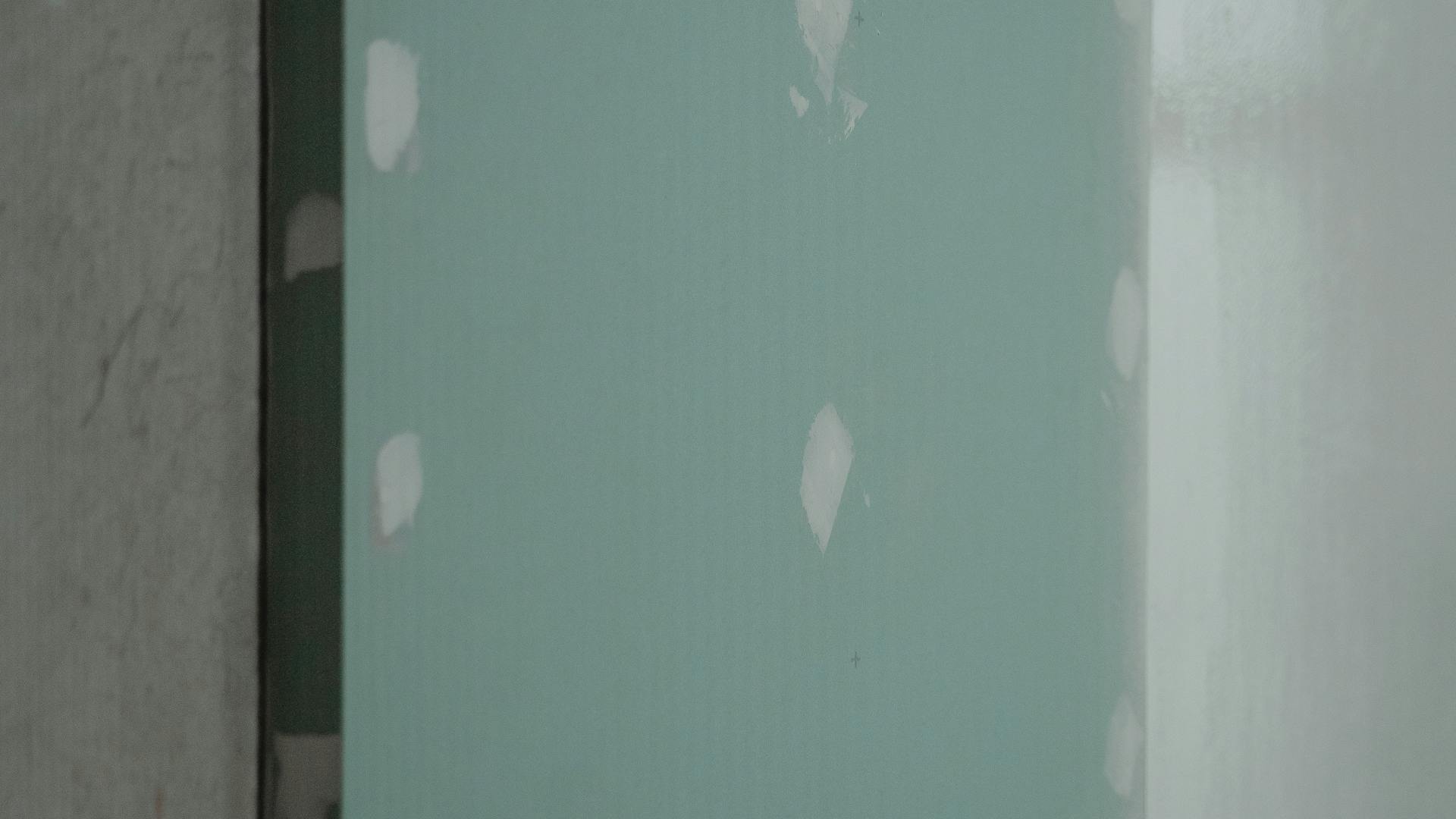
Moisture-resistant drywall — purple board, fiberglass-faced panels, or Type X in fire-rated applications — gets specified for bathrooms, laundry rooms, and any area that's seen water intrusion. That's not an upsell. That's the correct call for this zip code.
The patching itself is a skill that takes years to develop. Most homeowners who've tried a DIY patch kit know exactly what we're talking about: the repair looks fine when it's wet, looks fine when it dries, looks fine after the first coat of paint — and then the light hits it at the wrong angle and there it is, a clearly visible circle or rectangle telegraphing right through the finish. That's a feathering problem. The compound wasn't blended out far enough, or it was sanded unevenly, or the texture doesn't match the surrounding wall. Any one of those things ruins the repair. It's also why professional drywall repair consistently produces results that DIY kits simply can't.
Getting it right requires a methodical approach. Here's what a professional patching service in Baton Rouge actually looks like from start to finish:
- Damage assessment first. Before anything gets patched, we look at what caused the damage. A hole from a doorknob is straightforward. A soft, discolored section of wall is a different conversation — because patching over active moisture or mold growth is a waste of everyone's time and money. We check the surrounding drywall for hidden damage, probe for soft spots, and if there's any sign of mold or ongoing water intrusion, that gets addressed before the patch goes in.
- Proper backing installation. Small holes — anything under about six inches — can often be handled with a California patch or a backer board method. Larger sections need solid backing behind the drywall edge, either by attaching to existing studs or installing horizontal backers between studs. Skipping this step is why patches crack. The drywall needs something rigid to fasten to.
- Correct panel selection. We pull from suppliers like ABC Supply Co. on Choctaw Drive and Builders FirstSource on Plank Road, and we match the panel thickness to what's already on your wall — typically half-inch for most residential walls, five-eighths for garage ceilings and fire-rated assemblies per IRC Section R302.
- Taping and joint compound application. This is where the work lives. Mesh tape for smaller repairs, paper tape embedded in the first coat for larger patches — then multiple coats of joint compound, each one feathered wider than the last, sanded smooth between coats. There's no shortcut here. Rushing the compound coats is the number one reason patches are visible after painting. Our approach to drywall taping follows the same multi-coat discipline on every job, regardless of size.
- Texture matching. This is the part that separates a professional patching service from a handyman with a bucket of mud. Baton Rouge homes run the full spectrum of textures — orange peel, knockdown, skip trowel, smooth finish, even some older homes in the Garden District with hand-applied plaster-style finishes. Matching existing texture requires practice, the right tools, and an honest eye. We test on scrap before touching your wall.
- Final sanding and prime coat. Once the texture is dry and matched, everything gets sanded to a paint-ready surface and primed. Skipping the primer coat over fresh joint compound leads to flashing — dull spots in the paint that make the repair visible even after two coats of finish paint.
Water damaged drywall patching in Baton Rouge deserves its own conversation, because it's the most common call we get. This city sees more than 60 inches of rainfall annually — one of the highest averages in the continental United States — and the combination of that rainfall with aging infrastructure, hurricane exposure, and plumbing systems that weren't designed for this humidity means water intrusion is a near-constant reality for homeowners across the parish.
After Hurricane Ida in 2021, East Baton Rouge Parish implemented stricter inspection protocols specifically for storm-damaged drywall replacement. Mold remediation has to be documented before re-drywalling in affected structures. That regulation exists for a good reason — we've gone into homes in the Tara and Shenandoah areas where the previous contractor patched right over visibly mold-compromised framing, and the results were predictably bad. Black mold doesn't stop growing because you put new drywall in front of it.
Drywall patch after a pipe burst is another scenario we handle regularly, especially after hard freeze events. The February 2021 winter storm caught a lot of Baton Rouge homeowners off guard — pipes that had never been insulated because they'd never needed to be suddenly froze and burst, and the resulting water damage hit walls and ceilings across the metro area. We were doing patch repairs in Kleinpeter, Southdowns, and all the way out near the Pennington Biomedical Research Center corridor for months after that storm.
Pipe burst patches have their own specific considerations. The water doesn't just damage the drywall it contacts directly — it wicks laterally through the paper face and vertically through the gypsum core, so the actual damage zone is always larger than it looks. In our experience, you need to cut at least six inches beyond any visible staining or softness to get back to genuinely dry, structurally sound drywall. Cutting to the nearest stud or framing member is standard practice, because that gives you solid backing for the new panel and a clean, straight seam to tape. When the damage is extensive enough that full sheets need to come down, the work starts to overlap with new drywall installation — and we handle that transition the same way, same standards, same finish.
HVAC-related moisture damage doesn't get talked about enough in Baton Rouge. Because the climate is subtropical and HVAC systems run essentially year-round, improper vapor barrier installation behind exterior walls creates a condensation problem that slowly destroys drywall from the inside out. We've opened up walls in Mid City bungalows and Bocage homes where the drywall looked perfectly fine from the living space side and was actively deteriorating on the back face. That's a vapor barrier conversation, not just a patching conversation — and a contractor who doesn't bring it up is going to leave you patching the same wall again in two years.
Small hole repair is the high-volume end of what we do. Nail pops. Screw pops. Doorknob impacts. The inevitable damage from hanging a heavy mirror or a flat-screen TV mount that didn't hit a stud. These repairs are quick, but they're not casual — a nail pop that gets filled without addressing why the nail popped in the first place (usually framing movement from thermal expansion and contraction in this extreme heat) will pop again. Fix the fastener, not just the hole. Drive a drywall screw adjacent to the popped nail, dimple both properly, and fill with three thin coats of compound. That repair holds.
Homeowners in neighborhoods like University Hills and Bocage often reach out after a contractor has already been in for plumbing or electrical work and left access holes in the walls. Electricians, HVAC techs, plumbers — they cut what they need to cut to do their work, and patching is outside their scope. We come in after. It's a straightforward referral chain, and we work with a handful of local trade contractors on a regular basis for exactly this kind of follow-up work. For anything beyond a simple patch — full wall rebuilds, additions, or remodels — our broader drywall services in Baton Rouge cover the full scope.
For homes in FEMA-designated Special Flood Hazard Areas — which covers a significant portion of East Baton Rouge Parish given the proximity to the Mississippi River and the Comite River flood plains — there are material requirements that apply to any drywall work below the Base Flood Elevation. Flood-resistant materials like cement board or fiberglass-faced drywall are required in these zones per local floodplain ordinances, and patching with standard paper-faced gypsum in a flood zone isn't just a bad idea — it may not pass inspection. We know which areas of Baton Rouge these regulations apply to, and we spec materials accordingly.
The permit question comes up occasionally. For straightforward drywall patching — filling holes, repairing water damage, matching texture — a building permit isn't typically required through the City-Parish Department of Development. But if the patching is part of a larger renovation that involves structural or electrical work, permits enter the picture. For commercial drywall work in East Baton Rouge Parish, licensed contractors are required. We're licensed through the Louisiana State Licensing Board for Contractors, and for residential projects exceeding $7,500, we provide written contracts as required under Louisiana Act 1484.
The patch that looks invisible in the contractor's photos and the patch that actually looks invisible on your wall are two different things. The difference is skill, patience, and the right materials for this specific climate. We've been doing this work in this city long enough to know what Baton Rouge walls need — and what they'll punish you for getting wrong.
Call us for a straight assessment of your drywall damage. We'll tell you exactly what the repair involves, what materials we're recommending and why, and what the finished result will look like. No mystery, no upselling, no patching over problems that need to be fixed first. Just solid repair work that holds up in the Louisiana heat and humidity — and a wall you stop noticing again.
Last updated: