

Drywall Priming Baton Rouge, LA
Most people skip right past the primer. They see freshly finished drywall — smooth, clean, joints all feathered out — and think the hard work is done. It's not. What's sitting on that wall is raw gypsum paper and dried joint compound, two surfaces that drink paint at completely different rates. Roll finish paint directly onto unprimed drywall and you'll see it immediately: flashing, blotchy color, a finish that looks like it was applied by someone who'd never held a roller. In Baton Rouge, we've watched this mistake play out on jobs from Sherwood Forest to the Garden District, and it costs homeowners every single time — not just in wasted paint, but in repaints, callbacks, and the kind of frustration that doesn't go away until the whole wall gets done right from the start.
Drywall priming isn't a shortcut step. It's the foundation that everything else depends on.
In this climate specifically, it carries more weight than it does almost anywhere else in the country. Baton Rouge sits in a subtropical zone where humidity averages between 75 and 90 percent year-round — numbers that would be considered extreme weather events in most of the continental US are just Tuesday here. That moisture doesn't stay outside. It works through walls, condenses on poorly insulated surfaces, and gets trapped behind paint films applied over unprimed drywall that can't breathe correctly. We've cut into walls in Mid City and Broadmoor where paint was peeling from the inside out, and almost every time the root cause traces back to a primer step that was skipped or done wrong years earlier. The right drywall primer in Baton Rouge isn't just about paint adhesion — it's about sealing the surface against a climate that actively tries to get into your walls.
This page covers what primer actually does at a technical level, why products and processes that work in drier climates don't always hold up here, what we look for on every job before a single drop of primer goes on the wall, and how to tell whether the drywall priming service you're hiring knows what they're doing or is cutting corners that'll show up six months from now.
What Drywall Primer Actually Does (And Why It's Not Just Watered-Down Paint)
There's a persistent myth — among homeowners who've watched too many weekend DIY videos and even some contractors — that you can prime new drywall with a thinned coat of regular latex paint and get the same result. You can't. The chemistry is completely different, and the difference matters most on new drywall where you're dealing with two distinct substrate problems at once.
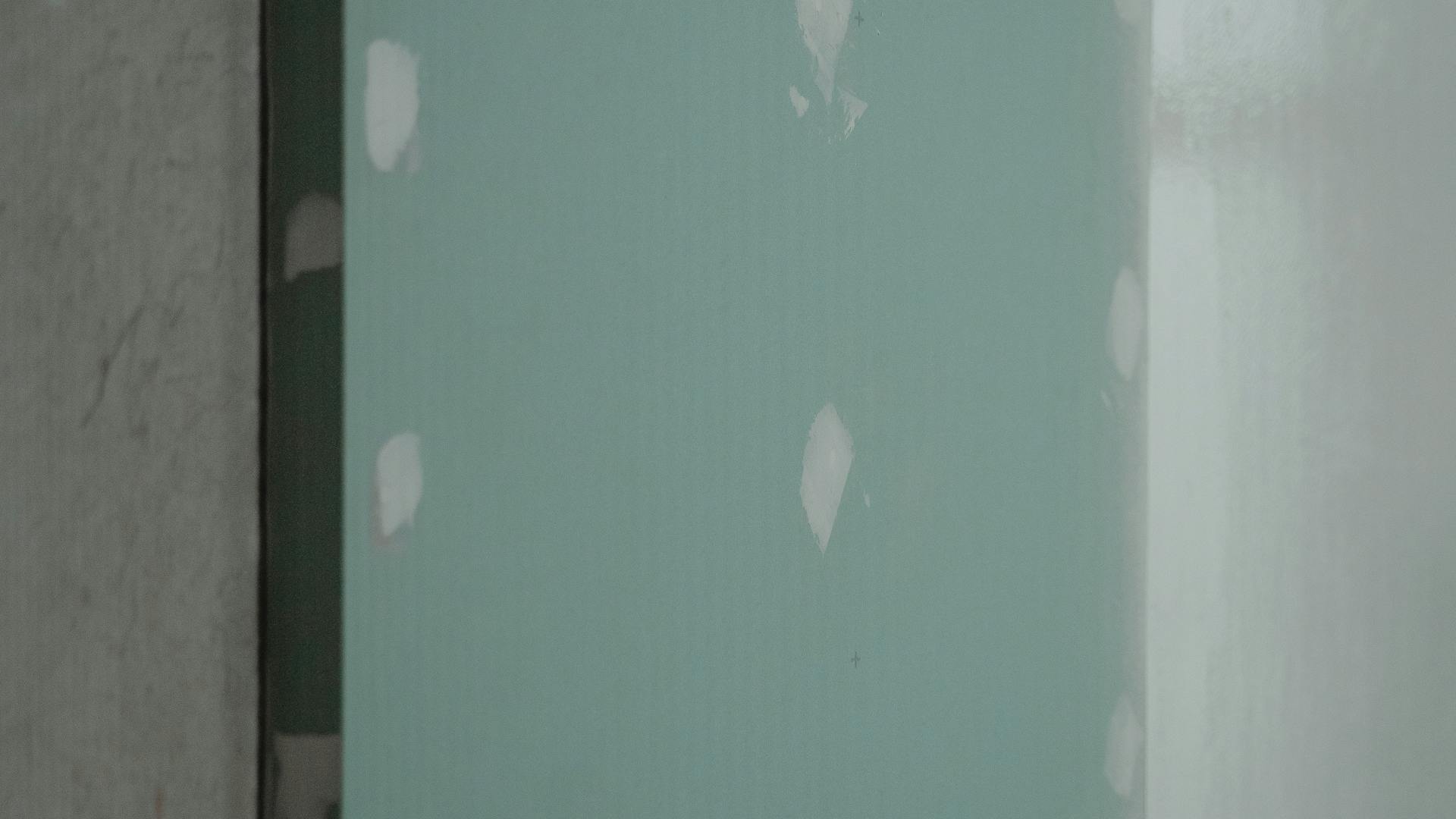
Raw drywall paper is highly porous and absorbent. Joint compound — even fully cured compound — is even more absorbent, and it absorbs at a different rate than the paper facing does. Roll finish paint over both without a primer coat and you'll get what finishers call flashing: areas where the compound sucked up more paint than the surrounding paper, leaving dull, matte spots that look different from every angle in raking light. It's one of the most common complaints we hear from homeowners who had someone else do the work, and it's almost always a priming problem, not a painting problem.
PVA drywall primer — polyvinyl acetate — is specifically engineered to solve this. It penetrates the surface, seals both the paper and the compound, and equalizes the porosity across the entire wall so your finish coat goes on uniformly. PVA primer also provides the mechanical tooth that finish paint needs to bond correctly. Without it, you're essentially asking your paint to stick to chalk dust. In a humid environment like Baton Rouge where walls cycle through moisture changes driven by HVAC running almost year-round, a poorly bonded paint film will fail faster than you'd expect.
Beyond PVA, there are situations in Baton Rouge where mold-resistant primer and moisture-resistant drywall primer aren't optional — they're the only responsible choice. Flood zone areas throughout East Baton Rouge Parish, particularly in neighborhoods that sit in FEMA Zone AE, require moisture-resistant materials under local floodplain management ordinances that got significantly tighter after the August 2016 flood. We've worked on dozens of post-flood rebuilds across the parish — houses in Kleinpeter, Old Jefferson, areas around the Cortana Mall redevelopment corridor — and on every one of those jobs, primer selection was a deliberate technical decision, not an afterthought.
PVA Primer vs. Other Primer Types: What We Use and Why
Not all primers perform the same on new drywall, and the choice matters more than most people realize. Here's how we break it down on our jobs:
- PVA Drywall Primer: The standard for new construction and fresh drywall taping and finishing work. Fast-drying, purpose-built to seal gypsum paper and joint compound uniformly, and significantly more economical than using finish paint as a sealer. We use this on the majority of new drywall work — residential builds in Shenandoah, commercial tenant improvements near Perkins Rowe, university housing projects around LSU Campus. Products like Sherwin-Williams ProMar Drywall Primer or similar PVA formulations from their locations throughout Baton Rouge are our go-to starting point.
- High-Build Primer / Skim Coat Primer: Used when the drywall finish has minor imperfections that need to be filled rather than sanded. A high-build primer adds a thicker film that can hide small surface irregularities. We reach for this on older homes in Garden District or University Hills where the walls have seen decades of repainting and the substrate isn't perfectly flat.
- Mold-Resistant Primer: Non-negotiable in bathrooms, laundry rooms, kitchens, and any below-grade or flood-prone space. Baton Rouge's humidity creates ideal conditions for mold growth behind walls, and Formosan termite damage — which is severe throughout the parish — often requires drywall removal that exposes structural members to open air and moisture before new drywall goes back up. A mold-resistant primer on the new drywall is a basic protective measure in those situations.
- Oil-Based Primer: Rarely our first choice for new drywall, but useful for heavy stain blocking on drywall repair jobs where water staining or smoke damage is present. Slower drying, stronger odor, and harder to work with in Baton Rouge's summer heat — we use it when the job calls for it, not as a default.
The primer you choose should match the specific conditions of the room, the substrate condition, and the climate reality of the space. A PVA primer that works perfectly in a climate-controlled bedroom in Bocage isn't necessarily the right call for a garage conversion near the Baton Rouge Metropolitan Airport where temperature swings between seasons create real thermal stress on the wall assembly.
The Baton Rouge Climate Problem: Why Priming Here Is Different
Sixty-plus inches of rain a year. That's what Baton Rouge averages — more annual rainfall than Seattle, more than Miami, more than almost anywhere in the continental US. And unlike cities that get their rain in concentrated seasons, Baton Rouge gets soaked consistently, month after month, punctuated by hurricane season from June through November that can dump several inches in a matter of hours.
What this means for drywall priming specifically is that moisture management isn't a secondary consideration — it's the primary one. Here's what we've observed over years of working on jobs across the parish:
- Unprimed or poorly primed drywall in humid conditions absorbs ambient moisture through the wall cavity, causing the paper facing to soften and lose its bond with the gypsum core over time.
- Joint compound that wasn't properly sealed with primer will re-emulsify slightly when humidity is consistently high, eventually causing tape to bubble or crack — the same failure mode you see after water damage, but caused entirely by ambient humidity over years.
- Paint applied directly over unprimed new drywall in summer — when relative humidity in Baton Rouge regularly exceeds 85% — may not cure correctly because the substrate is already holding moisture, leading to adhesion failures that show up months later when the wall dries out and the paint film separates.
- HVAC systems running nearly year-round create constant pressure differentials that push humid air through wall assemblies. A properly primed and painted wall surface acts as a vapor retarder; an unprimed one doesn't.
The August 2016 flood changed how a lot of contractors in this market think about moisture-resistant materials. When tens of thousands of homes took on water across East Baton Rouge Parish, the drywall replacement work that followed — and it lasted for years — forced a reckoning with how materials were being selected and installed. We saw what happened to walls rebuilt with standard materials and standard priming practices in flood-prone areas. We also saw what held up. High humidity drywall primer and mold-resistant formulations aren't upsells in this market. They're the baseline on any job where moisture is a known factor.
New Construction vs. Repair: Priming Isn't the Same Job Twice
Priming new drywall on a new construction project is a different animal than priming patched or repaired drywall, and treating them the same way is one of the more common mistakes we see from contractors who don't specialize in drywall finishing.
On new construction — say, a residential build in Tara or a commercial buildout near the Shaw Center for the Arts — you're working with a consistent substrate. All new drywall, all new compound, surfaces that have never seen paint. The goal of the primer coat is equalization: seal everything uniformly so the finish coat behaves predictably across the entire surface. One properly applied coat of PVA primer, allowed to cure fully before finish painting, is typically the right approach. The critical variables are application rate (too thin and you haven't sealed the compound; too thick and you're wasting material and adding dry time), ambient humidity during application, and surface temperature.
Repair work is more complicated. A patched section of drywall in a Broadmoor living room sits surrounded by walls that have been painted multiple times over decades. The patch is new compound over new or existing paper; the surrounding wall is old paint over old primer over old compound. These surfaces have completely different porosity profiles. Prime them the same way and you'll likely end up with the patched area flashing differently than the surrounding wall — visible in raking light even after two finish coats.
In our experience, repair priming often requires a spot-prime step on the fresh compound, a full-wall prime coat to unify the surface, and sometimes a skim coat primer to bridge the texture difference between old and new surfaces before finish painting begins. We've handled this kind of work on homes throughout the parish — post-storm repairs in Sherwood Forest after tropical weather events, post-pipe-burst repairs in University Hills after a hard freeze cracked supply lines, post-termite-remediation rebuilds where structural treatment required removing and replacing full wall sections. Each one is a different substrate puzzle, and the primer approach has to match the actual conditions on the wall, not a one-size-fits-all checklist.
What We Check Before Primer Goes On
A lot of priming failures aren't primer failures — they're prep failures. The primer gets blamed because it's the last thing that happened before the finish coat went on wrong, but the real problem started earlier. Before we prime anything, we work through a consistent checklist that catches the issues that cause problems downstream.
Compound cure time. Joint compound needs to be fully dry before primer goes on — not surface-dry, fully dry. In Baton Rouge's humidity, that takes longer than the product data sheets suggest. We've seen compound that looked dry on the surface still holding moisture in the center of a heavy fill coat. Prime over wet compound and the primer traps that moisture, which eventually causes the compound to crack or the tape to lift. We check with a moisture meter on thick fills and don't rush this step regardless of schedule pressure.
Surface temperature. Primer applied to a surface below 50°F or above 90°F won't cure correctly. In Baton Rouge, the cold end of that range is rarely a problem, but summer heat absolutely is. Walls in direct sun exposure on the south and west sides of a building can hit surface temperatures well above ambient air temperature. We check surface temps before starting and schedule around peak heat when necessary.
Dust and contamination. Drywall finishing generates a lot of dust. Any dust left on the surface before priming creates a weak layer between the substrate and the primer film — the primer bonds to the dust, not the wall, and the whole system can delaminate. We vacuum and wipe down surfaces before priming, every time. It adds time. It's worth it.
Corner bead condition. Metal or vinyl corner bead needs to be fully set and the compound over it fully cured before priming. Loose bead or soft compound at corners is a common source of cracking that shows up after painting. We check every corner before we prime.
Texture consistency. If the wall has been textured — knockdown, orange peel, skip trowel — the texture needs to be fully dry and consistent before primer goes on. Wet texture under primer traps moisture and can cause the texture to separate from the wall surface. We've seen this on rushed jobs where the texture was still soft when the primer crew came through, and the result is a wall that has to be redone from scratch.
Application: How Primer Goes On Matters as Much as Which Primer You Use
Even the right primer applied wrong will underperform. Application technique on drywall primer is straightforward but not forgiving of shortcuts.
For PVA primer on new drywall, we apply by roller — typically a 3/8" nap on smooth surfaces, 1/2" nap on textured — at the coverage rate specified by the manufacturer. Too thin and you haven't sealed the compound. Too thick and you're building up a film that takes longer to dry and can sag on vertical surfaces. We maintain a wet edge throughout the application to avoid lap marks, which show up in raking light just like flashing does.
Brush work at corners and edges comes first, then roller work on the field. We don't skip the brush work and try to cut corners with the roller — the primer needs to get fully into inside corners and along ceiling lines, and a roller alone won't do it consistently.
Dry time before finish painting is non-negotiable. In Baton Rouge's summer humidity, PVA primer can take longer to dry than the label suggests. We check with a moisture meter and by touch before calling a surface ready for finish paint. A primer coat that's still holding moisture when finish paint goes on is a recipe for adhesion failure — the same problem we're trying to prevent by priming in the first place.
How Priming Connects to the Rest of the Drywall Process
Priming doesn't happen in isolation. It's one step in a sequence, and how well it works depends on how well every step before it was executed. Drywall installation that leaves fasteners proud of the surface or boards with damaged paper facing creates problems that primer can't fix. Mudding and finishing that leaves ridges, tool marks, or insufficiently feathered joints will still be visible after primer — primer seals the surface, it doesn't fill defects. Taping that wasn't pressed fully into the compound will bubble through primer and paint alike.
This is why we approach every job as a complete process rather than a series of disconnected tasks. When we're involved from the start of a drywall project in Baton Rouge, we can make sure each step sets up the next one correctly. When we're brought in to prime and paint after someone else did the finishing work, we do a thorough surface inspection first — because priming over a bad finish doesn't hide the problems, it just makes them permanent.
Common Drywall Priming Questions We Hear in Baton Rouge
Do I really need a separate primer coat, or can I use paint-and-primer-in-one? On new drywall, no — paint-and-primer-in-one products are not a substitute for a dedicated PVA primer coat. They're formulated for previously painted surfaces, not raw gypsum. On new drywall, they'll flash just like straight finish paint does. We've seen this mistake made on new builds throughout the parish, and it always requires going back and doing the job correctly.
How many coats of primer does new drywall need? Typically one properly applied coat of PVA primer is sufficient on new drywall before finish painting. If the finish reveals flashing after the first finish coat, a second prime coat may be needed — but this usually indicates the first coat was applied too thin or the compound wasn't fully cured. On repair work, two prime coats are sometimes necessary to unify old and new surfaces.
Can I prime drywall myself? Technically yes. PVA primer is available at any paint supply store in Baton Rouge. The application itself isn't complicated. What most DIYers underestimate is the prep work — getting compound fully cured, cleaning the surface properly, checking for loose tape or bead — and the importance of application rate. Thin spots will flash. Thick spots will sag or take too long to dry. If you're priming a small repair in a low-visibility area, DIY is reasonable. If you're priming a full room or a new construction project, the cost of having it done correctly is worth it.
What happens if I paint over drywall that wasn't primed? In the short term, you'll likely see flashing — uneven sheen and color across the surface. In the medium term, you'll use significantly more finish paint trying to cover it. In the long term, especially in Baton Rouge's climate, you're looking at adhesion failures, moisture infiltration behind the paint film, and potential mold issues in high-humidity spaces. The fix is stripping back to bare drywall, priming correctly, and repainting — which costs far more than priming would have in the first place.
Get Drywall Priming Done Right in Baton Rouge
If you've got new drywall that needs to be primed before painting, repair work where the patched sections need to blend with the surrounding wall, or an older home where previous paint jobs have left the walls in rough shape, we can help. We work on residential and commercial projects throughout Baton Rouge and East Baton Rouge Parish — from new construction in the suburbs to post-flood rebuilds in the older neighborhoods closer to the river.
Call us or use the contact form to describe your project. We'll take a look, give you a straight answer about what the surface needs, and quote the work honestly. No upsells, no shortcuts, no primer applied over a surface that isn't ready for it.
Last updated: