

Drywall Sanding Baton Rouge, LA
Sanding is the part nobody talks about — and the part that determines everything. The hanging, the taping, the mudding, all of it disappears by the time a room is finished. What you actually see is the surface left behind after the final pass with a sander. Get that wrong, and it doesn't matter how clean the tape job was or how many coats of compound went on. The wall will tell on itself the second paint goes up and light hits it at an angle. We've watched it happen in Garden District homes with 10-foot ceilings, in Bocage renovations where the homeowners spent six figures on everything else, in Mid City flips where someone cut corners on the finish and the whole project unraveled.
Professional drywall work in Baton Rouge isn't the same job it is in Denver or Charlotte. The climate here changes everything. That 80% humidity sitting over the city from April through October doesn't just make you sweat — it changes how joint compound cures, how long you have to wait between coats, how aggressively you can sand without tearing into a surface that hasn't fully hardened. We've pulled up to jobs off Perkins Road where a crew the day before had sanded too early, in the afternoon heat with the AC off, and the compound had case-hardened on the outside while staying soft underneath. Looked fine until it didn't.
This is what separates a professional drywall sanding service from a guy with a sanding block and some ambition. The craft is real. The conditions here demand it.
What Drywall Sanding Actually Involves
Most people picture sanding as the last five minutes of a job. Knock down the ridges, smooth it out, done. That's not how it works — not if you want a surface that holds up under paint and actually looks finished. Proper drywall sanding is a multi-stage process that starts between your first and second coats of compound and doesn't end until you've achieved what the industry calls a Level 5 finish: a surface so flat and uniform that even skim-coat paint at a raking angle won't reveal a single imperfection.
Here's how the process breaks down on a professional job:
- Sanding between coats — After the first coat of joint compound dries, you're not chasing a final finish. You're knocking down ridges, tool marks, and high spots before the next coat goes on. Skip this and every subsequent coat amplifies the imperfections rather than hiding them.
- Feathering drywall edges — Every coat of compound needs to be feathered out wider than the last, blending into the flat drywall face. Sanding those feathered edges flat without digging into the paper face is a skill. Sand too aggressively and you raise the paper, which telegraphs right through paint.
- Sanding seams and corners — Flat seams and inside corners each require different techniques and different tools. A pole sander works for flat fields. Corners need hand sanding with a folded sheet or a corner tool to avoid rounding out what should be a crisp edge.
- Final coat sanding — This is where the finish is made or broken. The final coat is typically a thin skim of all-purpose or topping compound, and the sanding here is done with fine-grit paper — usually 120 to 150 grit — in long, consistent strokes. No swirl marks. No chatter lines. No burned-through spots.
- Paint-ready surface inspection — Before we call a sanding job done, we check the surface under a raking light. A trouble light held low and parallel to the wall will find every flaw that overhead lighting hides. If it shows anything, we fix it before the painter walks through the door.
That last step — the raking light check — is something a lot of crews skip because it creates more work for them. We do it every time. Finding a problem before paint is a five-minute fix. Finding it after paint means primer, another coat, and an unhappy customer.
Dustless Drywall Sanding in Baton Rouge
Drywall dust is genuinely awful. Fine, alkaline, and light enough to hang in the air for hours, it coats everything in a room — HVAC vents, light fixtures, hardwood floors, furniture — and it doesn't wipe off clean. It smears. We've seen it settle into the finish on freshly refinished floors in University Hills homes and cost the homeowner a re-sand. We've seen it clog HVAC filters on new construction out near Shenandoah and cause issues that showed up months later.
Dustless drywall sanding solves that. The system works by attaching a HEPA vacuum sanding unit directly to the sanding head — either a pole sander or a random orbital sander — so dust is captured at the source before it ever becomes airborne. A true HEPA filter captures particles down to 0.3 microns, which means the fine silica dust that causes the most damage to surfaces and lungs doesn't escape into the room.
This matters more in Baton Rouge than people realize. Homes here run their HVAC systems year-round. A cloud of drywall dust in a room with a running air handler gets pulled through the system and distributed to every room in the house. We've walked into jobs in Broadmoor and Tara where a previous crew had sanded without containment, and you could taste the dust in rooms on the opposite side of the house.
Dustless sanding isn't a premium add-on. On occupied homes, it's the only responsible way to work. For jobs where some open sanding is unavoidable, we use drywall dust containment barriers — plastic sheeting sealed at doorways and HVAC returns — combined with negative air pressure to keep the work area isolated. It adds time to the job. It's worth it.
How Baton Rouge's Climate Affects Drywall Sanding
You can't talk about drywall finishing and sanding in Baton Rouge without talking about humidity. The city averages 75 to 85% relative humidity year-round, and in the summer months — when most construction and renovation work is happening — afternoon heat index values regularly push past 105°F. Both extremes create problems for joint compound, and both affect when and how you can sand.
High humidity slows drying time significantly. A coat of compound that might cure overnight in a climate-controlled environment in October can take two full days to dry in an un-air-conditioned house in July. Sand it too early and you're not smoothing hardened compound — you're dragging wet material across the surface, creating gouges and ridges worse than what you started with. The worst sanding failures we see around Baton Rouge come from impatience. Someone checks the surface, it feels dry to the touch, they start sanding. But compound cures from the outside in, and what's dry on the surface can still be soft underneath.
High heat creates the opposite problem. Summer temperatures exceeding 95°F — especially in direct sun or in attic-adjacent spaces — cause compound to skin over on the surface while the interior stays wet. On thin coats, it can dry so fast that it shrinks and micro-cracks before it can be sanded. We've seen this on jobs near the Baton Rouge Metro Airport corridor and in new construction out toward Kleinpeter where houses are closed up and interior temperatures climb past what the compound can handle.
The fix for both is climate control. Running air conditioning during the finishing and sanding phases isn't optional on a quality job here — it's how you get consistent results. When AC isn't available, we adjust: smaller batches of compound, earlier start times to beat the afternoon heat, longer waits between coats. It's slower. The alternative is callbacks.
Then there's the foundation movement issue. Baton Rouge sits on expansive clay soils that shift with moisture content — swelling in wet seasons, contracting in dry spells. Homes throughout Mid City, Sherwood Forest, and the older neighborhoods near Southern University campus deal with this constantly. That soil movement telegraphs into the structure, and the first place it shows up is in drywall seams and corners. Cracks along butt joints, stress fractures at window corners, tape that's lifted at the edges. Good drywall repair work in these situations requires extra attention to feathering — blending repairs out wide enough that the transition is invisible even if the underlying movement continues.
Finish Levels and Why They Matter for Sanding
The drywall industry uses a standardized system — finishing levels 1 through 5 — to define how much finishing and sanding work a surface requires. Most homeowners have never heard of it, but every professional drywall contractor in Baton Rouge knows the system, and it directly determines how much sanding is involved in any given job.
- Level 1 — Tape embedded in compound, no sanding required. Used in plenum spaces, attics, areas that will never be seen.
- Level 2 — One coat of compound over tape and fasteners, light skim, minimal sanding. Used in garages and storage areas, or under tile where the surface will be covered.
- Level 3 — Two coats, sanded smooth, suitable for heavy texture finishes. If you're applying a heavy knockdown or skip trowel, a Level 3 finish is typically sufficient because the texture hides minor imperfections. This pairs well with professional drywall texturing work.
- Level 4 — Three coats, properly sanded, suitable for flat paint or light texture. This is the standard finish level for most residential construction in Baton Rouge — what you get in new homes out in Shenandoah and in most renovation work across the metro area.
- Level 5 — Three coats plus a full skim coat over the entire surface, sanded to a uniform flat finish. Required for semi-gloss or gloss paint, for walls under strong directional lighting, and for high-end residential and commercial projects. This is the most labor-intensive finish level and demands the most from the sanding process.
The finish level you need depends on what goes on top of it. Flat paint in a bedroom? Level 4 is fine. Semi-gloss in a kitchen or bathroom? You need Level 5, or every imperfection under that sheen will show in the morning light. Eggshell in a living room with large windows? It depends on orientation — south-facing rooms with afternoon sun at a low angle in the fall are notorious for exposing every flaw a Level 4 finish leaves behind.
We've had this conversation with homeowners in Bocage who were surprised their painter was flagging problems after a Level 4 finish. The painter wasn't wrong. The finish level just wasn't right for the paint sheen they chose. Getting that conversation sorted at the beginning — before the mud is even mixed — saves everyone time and money. It's also why the mudding phase and the sanding phase need to be planned together, not treated as separate decisions.
Tools and Techniques We Use
The difference between a smooth wall and a mediocre one often comes down to tools. Not because expensive equipment does the work automatically, but because the right tool for each specific task makes consistent results achievable across an entire job.
For flat field sanding, we use a pole sander with a flexible head that conforms to slight variations in the wall plane. Rigid pole sanders can skip over low spots and dig into high ones, leaving a wavy surface that only becomes visible once paint goes on. For final coat sanding on high-finish jobs, we use a random orbital drywall sander paired with a HEPA vacuum — consistent scratch pattern, no swirl marks, dust captured at the source.
Corners and tight areas get hand sanding with folded 120-grit sheets or a purpose-built corner sanding tool. The goal in a corner is to sand both planes without rounding the apex — a mistake that looks fine in flat light and terrible under a sconce or recessed can. For jobs that include corner bead work, we pay particular attention to feathering the compound at the bead edge so the transition from metal to drywall face disappears completely.
Between coats, we use 100-grit paper for knocking down ridges and tool marks. Final sanding steps up to 120 or 150 grit depending on the finish level specified. We don't skip grits — jumping from 80 to 150 leaves scratch patterns that show under paint, especially on Level 5 work.
How Drywall Sanding Connects to the Rest of the Job
Sanding doesn't happen in isolation. The quality of the sand depends entirely on what came before it — and it sets up everything that comes after. A sanding crew walking onto a job where the taping was done poorly is fighting uphill from the first pass. Tape that's bubbled, crowned seams, or inside corners with too much buildup all require more aggressive sanding to correct, which increases the risk of burning through the drywall face paper.
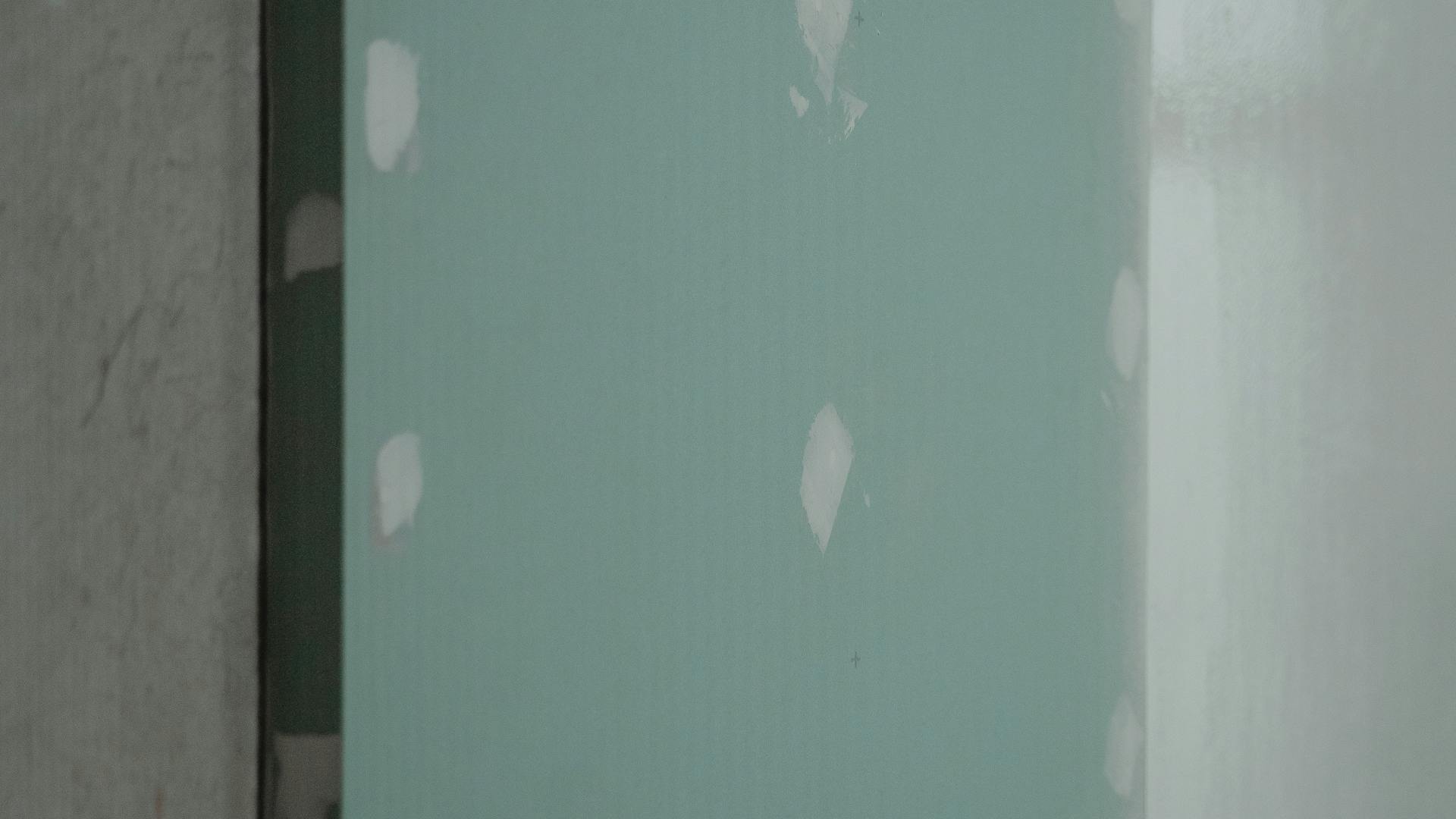
On the back end, sanding sets up the primer coat. A properly sanded surface — dust-free, flat, with no raised paper or gouges — takes primer evenly and gives the painter a consistent base. A surface that wasn't sanded properly will absorb primer unevenly, flash differently under the first coat of paint, and require additional work to correct. That's why we always recommend pairing our sanding work with professional drywall priming — the two steps are closely connected, and having the same crew handle both eliminates the handoff problems that cause most finish failures.
For new construction or full-room renovations, the sequence runs: installation, taping, mudding, sanding, priming. Each phase builds on the last. Rushing any one of them creates problems that compound through the rest of the job. We've seen projects where a homeowner hired separate crews for each phase to save money, and the sanding crew inherited problems from the taping crew, and the painter inherited problems from the sanding crew. By the end, nobody was happy and the cost to fix it exceeded what a single coordinated crew would have charged from the start.
What to Expect When You Hire Us
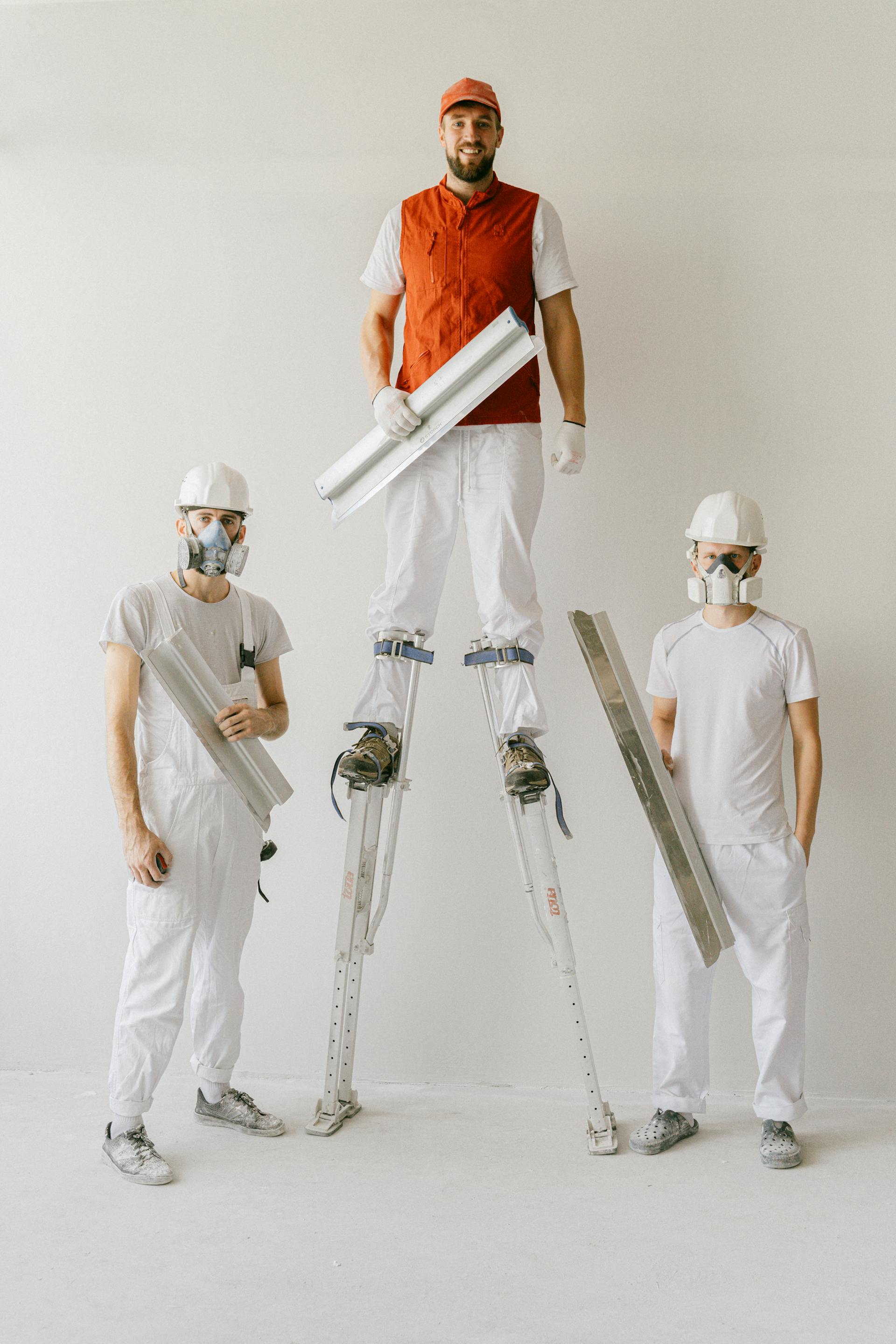
We show up on time, we bring the right equipment, and we don't leave until the surface passes a raking light inspection. That's the short version.
The longer version: before we start sanding, we assess the existing compound work — checking for voids, lifted tape, crowned seams, or areas that need spot repair before sanding can begin. If we find issues, we tell you about them before we start, not after. We set up dust containment appropriate for the job — full dustless systems on occupied homes, barrier containment on larger open sites. We sand in the correct sequence, using the correct grits, and we don't rush the process to hit an artificial deadline.
When we're done, the surface is clean, flat, and ready for primer. We don't leave compound dust on the floor, compound smears on the baseboard, or sanding residue in the HVAC system. The job site looks better when we leave than when we arrived.
If you're looking for a reliable drywall contractor in the Baton Rouge area, we're ready to talk through your project — whether it's a single room repair, a full renovation, or new construction finishing. Call us or fill out the contact form and we'll get back to you the same day.
Last updated: